
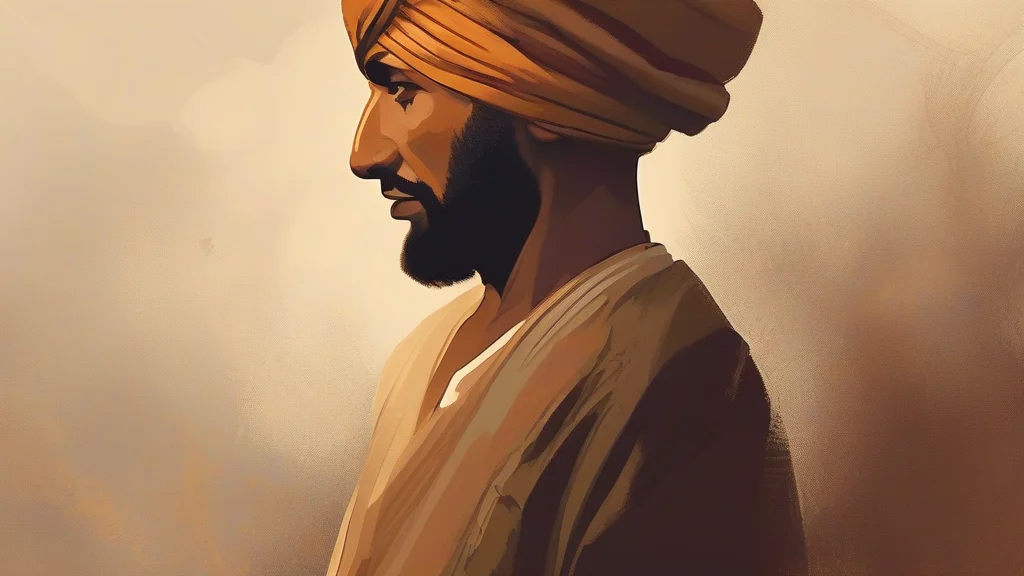
What does turban mean?
A turban is a countable noun referring to a head covering made from a length of cloth, usually wound or arranged around the head. It is especially associated with Sikh, Muslim, Hindu, and other South Asian and Middle Eastern communities, where particular styles may carry religious, regional, social, or ceremonial significance. In everyday English, the word can also refer more broadly to a cloth headwrap, without implying that the wearer belongs to any one group. Turbans vary greatly in shape, color, fabric, and manner of wrapping; some are practical everyday garments, while others are made for formal occasions or worn as symbols of identity. The word is commonly paired with expressions such as wearing, removing, or adjusting a turban. Its unusual history is also memorable: the English word ultimately comes through Turkish from Persian, whose related forms refer to a “head-band.”
nounA turban is a cap or head covering formed by winding or arranging a long piece of cloth around the head. The term is used especially for headwear associated with Sikh, Muslim, Hindu, and other South Asian or Middle Eastern traditions, though styles and uses vary widely.
- A head covering made from cloth, usually wound or arranged around the head and often worn as a traditional or religious form of dress.
"The Sikh participant adjusted his white turban before the ceremony."
"The Sikh participant adjusted his white turban before the ceremony."
"The museum displayed an embroidered turban alongside other traditional garments."
A countable noun; the standard plural is “turbans.”
"The shop sells turbans in several colors and fabrics."
The word's Persian ancestor, sarband, literally means “head-band,” a fitting description of a turban's practical origin as a way to wrap and secure cloth around the head.
Reviewed by Deb Chak, Editor. AI-assisted content curated by RJS Tech Solutions LLP.
Where does turban come from?
The English word turban was borrowed from French turban, which reflects Turkish turban. Turkish borrowed the word from Persian, where related forms include turban, turband, and sarband, referring to a headband or turban; sarband is built from sar, meaning “head,” and band, meaning “band.” The English word consequently retains the sense of a cloth band or covering for the head.
Related word forms
How turban is actually used
In contemporary English, turban is a neutral descriptive term, although its associations with particular religious and cultural communities mean it should not be used loosely for an ordinary hat. The spelling turban is standard; turband is chiefly a historical or regional variant.