
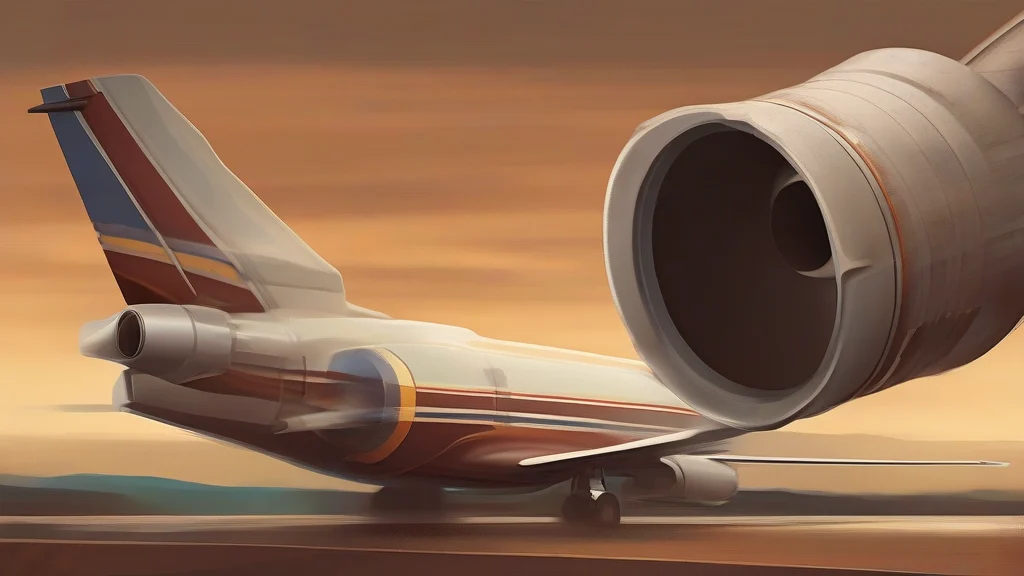
What does turbofan mean?
A turbofan is a type of jet engine widely used in modern aircraft. Its defining feature is a large fan driven by a turbine. The fan accelerates a substantial quantity of air, producing most of the engine's thrust, while another portion of the incoming air passes around the hot engine core and mixes with the exhaust. This arrangement makes high-bypass turbofans quieter and more fuel-efficient than older turbojets, especially during flight. The word is chiefly used in aviation and engineering, where “turbofan engine” is common, although “turbofan” alone can refer to the whole power unit. Turbofans are found in commercial airliners, military aircraft, and many other jet-powered vehicles. They should not be confused with turbojets, which route all air through the engine core, or with turboprops, which drive a propeller rather than use a jet exhaust to produce thrust.
nounA type of jet engine in which a turbine-driven fan accelerates a large mass of air, with part of that air bypassing the engine core. The term may also refer to the complete turbofan power unit installed in an aircraft.
- A jet engine in which a turbine-driven fan accelerates air around the engine core, producing thrust from the accelerated fan airflow and the hot exhaust gases.
- A complete jet power unit of this type, as installed in an aircraft.
"The new airliner uses two high-bypass turbofans to fly more efficiently and quietly."
"Engineers replaced the aircraft's old turbofans with larger, more efficient models."
"The lecture explained how a turbofan differs from both a turbojet and a turboprop."
The plural is used when referring to multiple turbofan engines or complete turbofan power units.
"The airline is replacing its older turbofans with quieter models."
Most modern airliners owe much of their efficiency and quietness to the enormous fans that send air around their turbofan engine cores.
Reviewed by Deb Chak, Editor. AI-assisted content curated by RJS Tech Solutions LLP.
Where does turbofan come from?
Turbofan is an English compound formed from turbo-, associated with turbines and turbomachinery, and fan, the component that accelerates a large mass of air. The compound arose with the development of fan-type jet engines during the twentieth century. Turbo- comes through French from Latin turbo, meaning “spinning” or “whirlwind,” while fan ultimately derives from Old English fann; words such as turbine, turbulent, and turbulence preserve the same Latin family of forms.
How turbofan is actually used
This is standard aviation and engineering terminology. In general use, it usually appears as an attributive modifier or as the shortened form of “turbofan engine”; it does not denote every kind of jet engine.
Easily confused with turbofan
A turbofan diverts some incoming air around the engine core, whereas a turbojet sends all airflow through the core and obtains thrust from its exhaust.
A turbofan produces thrust with a jet engine, while a turboprop uses a turbine to drive a propeller.