
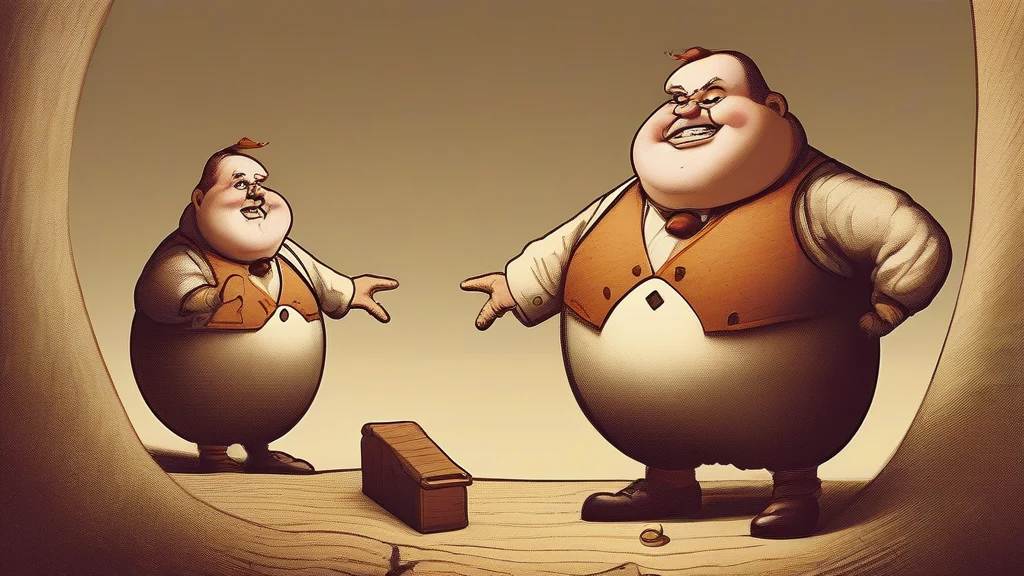
What does tweedle mean?
Tweedle most commonly denotes a quick alternation between two musical notes, especially when a player moves the finger or bow rapidly back and forth. As a verb, it describes this action; as a noun, it names an instance or series of such alternations. The word is relatively uncommon in contemporary usage but remains familiar through Lewis Carroll's paired characters Tweedledum and Tweedledee in Through the Looking-Glass. Its sound and spelling suggest quickness and lightness, making it particularly apt for the rapid motion of string playing. Tweedle should not be confused with twiddle: twiddle usually means to turn or twist something with the fingers, although both words can evoke quick repetitive movement. In a sentence, “tweedle between two notes” signals a clear musical action, whereas “twiddle a pen between your fingers” describes fiddling or fidgeting. For readers seeking a precise term for a rapid two-note alternation, tweedle is both accurate and characterful.
To make a succession of musical notes by moving rapidly between two notes, especially on a stringed instrument.
"The violinist tweedled between two notes to create a playful effect."
Usually intransitive and most natural in literary descriptions of string playing.
An instance or series of rapid alternations between two musical notes.
"The musician's tweedle was heard above the rest of the orchestra."
The noun is uncommon outside literary or specialist musical contexts.
The plural is grammatically standard but rarely used.
"The piece ends with two brief tweedles between the upper strings."
Tweedledum and Tweedledee made this droll, musical-sounding word immortal in Lewis Carroll's Through the Looking-Glass.
Reviewed by Deb Chak, Editor. AI-assisted content curated by RJS Tech Solutions LLP.
Where does tweedle come from?
Tweedle is generally derived from twiddle, an older word associated with twisting or turning with the fingers, through a change in the vowel spelling. Its musical use developed from the idea of rapid movement, particularly the quick alternation of notes while playing a stringed instrument. Lewis Carroll later formed the paired names Tweedledum and Tweedledee for the twins in Through the Looking-Glass.
Related word forms
How tweedle is actually used
Tweedle is relatively uncommon in contemporary English and has a literary or specialized character outside discussions of string playing. In Lewis Carroll's title, Tweedledee and Tweedledum are proper names rather than ordinary uses of the verb.
Easily confused with tweedle
To twiddle means to turn or twist something with the fingers, whereas to tweedle usually means to alternate rapidly between two musical notes.