
What does tweezing mean?
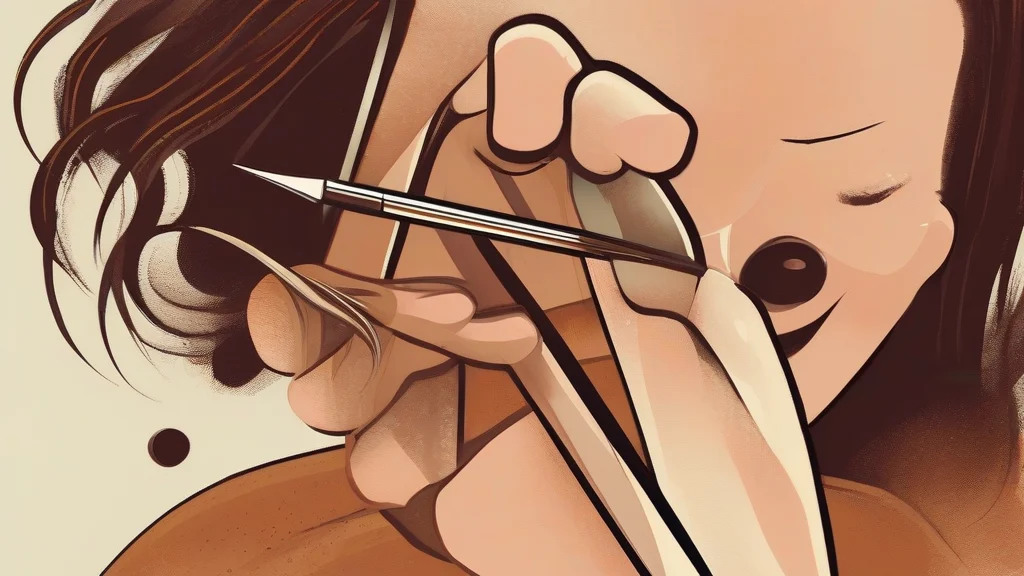
Tweezing is the process of pulling out individual hairs or other small unwanted strands, usually with tweezers and often as part of personal grooming. Its best-known use is shaping eyebrows, although it can also refer to removing unwanted facial or body hair, extracting splinters, or handling tiny objects with precision. The word can function as a noun naming the activity, as in “eyebrow tweezing,” or as a gerund describing the action, as in “She was tweezing her eyebrows.” Its connotations are practical and routine, though it is particularly associated with beauty and grooming. In contexts outside personal care, tweezing can imply careful extraction rather than broader grooming. The related words tweeze, tweezer, and tweezers all belong to the same familiar word family, with tweezers denoting the tool and tweezing denoting its characteristic use.
The activity or process of removing individual hairs or other small unwanted strands, especially with tweezers.
"Regular tweezing helped her maintain the shape of her eyebrows."
Usually used as a mass noun; a regular plural is uncommon and generally unnecessary.
To remove individual hairs or other small unwanted strands by pulling them with tweezers or the fingers.
"They spent the afternoon tweezing stray hairs from the cat's coat."
The verb form is normally the present participle or gerund of tweeze and is chiefly associated with grooming or precise removal.
Tweezing is normally treated as a mass noun, especially in phrases such as eyebrow tweezing.
"She is skilled at tweezing."
Tweezing turns a tiny pair of precision tools into one of beauty and grooming's most familiar rituals.
Reviewed by Deb Chak, Editor. AI-assisted content curated by RJS Tech Solutions LLP.
Where does tweezing come from?
Tweezing is an English formation based on the verb tweeze, which is historically associated with tweezers. The deeper origin of the older English forms behind these words is uncertain, so a more specific language-of-origin claim would be unsafe. In modern English, the -ing form developed independently as both a gerund and a present participle.
How tweezing is actually used
Tweezing is neutral and common in both formal and informal English, but is especially frequent in beauty, grooming, and personal-care contexts. As a verb form, it usually describes careful, repetitive removal with tweezers.
Easily confused with tweezing
Tweezers are the small pliers-like tools used for gripping; tweezing is the action of removing hairs or other small objects with them.