
What does typesetter mean?
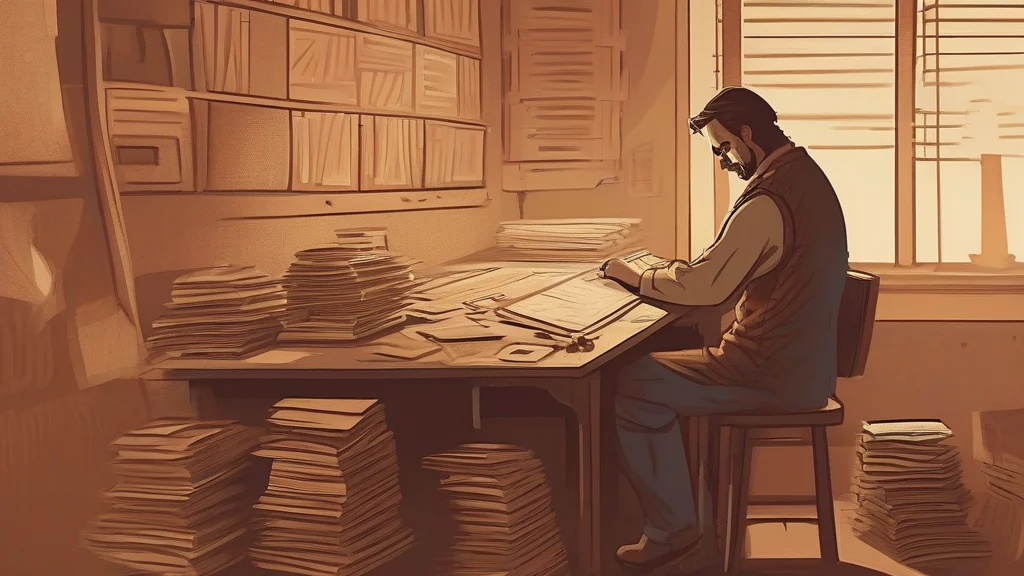
A typesetter is, in its traditional sense, a person who assembles individual pieces of movable type into words, lines, and pages for printing. The role required exacting judgment about spacing, alignment, and legibility as well as mechanical precision. In older job advertisements and historical accounts, a typesetter could also refer to the machine used to set type, though that sense has largely disappeared. With the advent of phototypesetting and digital publishing, the trade declined and the word became chiefly historical or nostalgic, while the related process is now usually called typesetting. Today the term remains useful when discussing print history, craftsmanship, and the labor behind books, newspapers, and posters. It should not be confused with a typist, whose work centered on a typewriter or keyboard rather than on arranging metal type for printing.
nounA typesetter is a person who arranges individual pieces of type into words, lines, and pages for printing. In older usage, the term can also refer to a machine that sets type or prepares text for printing.
- A person who arranges type into words, lines, and pages for printing.
- A machine that sets type or prepares text for printing.
"The typesetter arranged the headlines by hand, adjusting each line to give the page a balanced appearance."
"The newspaper hired an experienced typesetter to prepare the front page."
"The printing museum demonstrates a historic typesetter and the tools used to operate it."
The standard plural of the occupational noun is typesetters.
"Two experienced typesetters prepared the type for the evening edition."
Before digital typesetting, a typesetter built each page one piece of movable type at a time.
Reviewed by Deb Chak, Editor. AI-assisted content curated by RJS Tech Solutions LLP.
Etymology of typesetter
Typesetter is a compound formed from type and setter, with the latter being an agent noun derived from set. Type ultimately comes through Latin typus from Greek typos, meaning a model, pattern, or impressed form. The compound emerged in English in the early nineteenth century, during a period of major technological change in printing.
How typesetter is actually used
The occupational sense is now largely historical or nostalgic, although it remains common in discussions of traditional printing. The sense referring to a typesetting machine is chiefly historical.
Easily confused with typesetter
A typist operates a typewriter or keyboard, whereas a typesetter arranges individual pieces of type into pages for printing.