
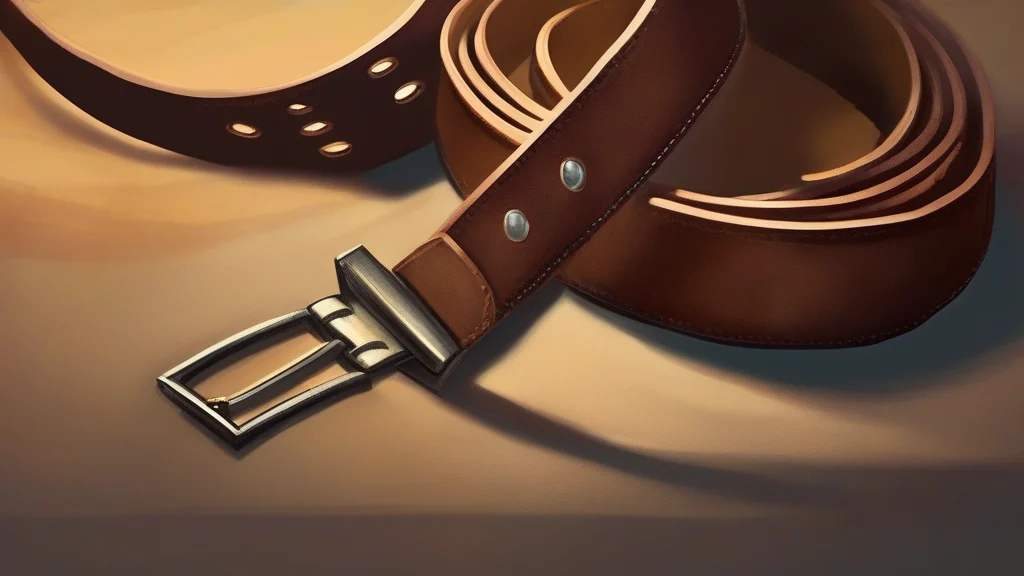
What does unbuckled mean?
Unbuckled is an adjective and a verb form most commonly associated with something whose buckle has been undone. As an adjective, it describes a belt, shoe, strap, or other fastening that is open or loose. It can also characterize a person or atmosphere as relaxed, informal, or no longer constrained: an unbuckled posture may suggest ease, while an unbuckled conversation may seem spontaneous and free of formality. As the past tense and past participle of unbuckle, it describes the act of releasing a fastening and can figuratively mean setting someone free from pressure or restriction. The word is neutral in register and familiar in British and American English. Its usefulness lies in its combination of a concrete physical meaning and a broader implication of release. A buckle secures something; an unbuckled thing is open, mobile, and potentially at ease.
Not fastened with a buckle; open or loose. Figuratively, relaxed or free from restraint.
"He left his jacket unbuckled and walked into the room."
Often used predicatively, as in “leave it unbuckled,” though phrases such as “an unbuckled belt” are also natural.
To undo the buckle or fastening of something; figuratively, to release from restraint.
"She unbuckled her cycling helmet and handed it to him."
This is the past tense and past participle of unbuckle; it is used intransitively for a person and transitively for an object.
The word that describes a loose belt can also describe a person visibly relaxing: to become unbuckled is to be released.
Reviewed by Deb Chak, Editor. AI-assisted content curated by RJS Tech Solutions LLP.
Where does unbuckled come from?
Unbuckled was formed in English by adding the prefix un- to buckle and using the participial ending -ed. The base verb buckle came through Old French boucle and Medieval Latin buccula, a diminutive related to Latin bucca, meaning “cheek.” The same Latin root also lies behind words such as buccal and buccinator, while buckler belongs to the same broader French-derived family.
How unbuckled is actually used
The adjective is common in both literal and figurative descriptions. As a verb, it is most often used for clothing, restraints, or objects fastened by buckles; figurative uses convey release from pressure or constraint.
Easily confused with unbuckled
Unbuckle is the base verb, while unbuckled is its past tense and past participle.