
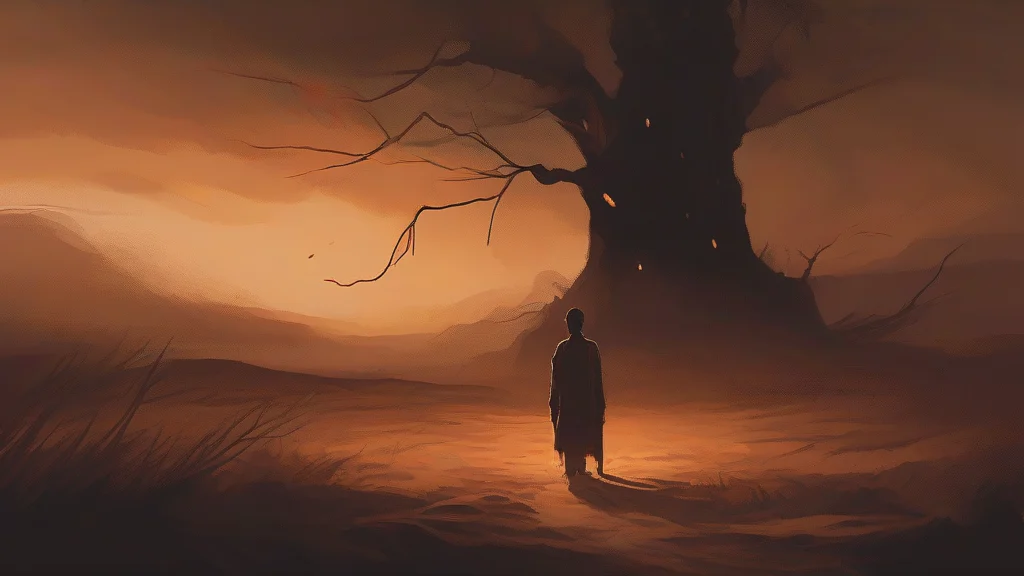
What does undying mean?
Undying is an adjective meaning that something endures forever or, most characteristically, continues to have significance after death. It is frequently applied to love, devotion, faith, reputation, and the memory of a person, as in “undying devotion” or “the undying legacy of an artist.” The word can also be used more broadly for something that seems never to end: “an undying stream of complaints.” Its tone is generally literary and often elevated, so it conveys not merely long duration but a sense of permanence that transcends ordinary life. Although “immortal” and “everlasting” are close alternatives, undying often has a more emotional or poetic resonance. The expression is especially associated with poetic language, but it appears naturally in formal prose, historical writing, and descriptions of lasting affection or cultural influence. It should be reserved for things imagined as genuinely permanent rather than merely long-lasting.
adjectiveContinuing to exist after death; enduring forever. By extension, unending or imperishable.
- Continuing after death or enduring forever.
- Unending, ceaseless, or imperishable.
"The couple remained bound together by an undying love that neither hardship nor time could erase."
"Despite the passage of centuries, the poem's undying appeal continues to move readers."
"The steady stream of letters seemed undying, continuing long after anyone had expected the correspondence to end."
Some words fade, but an undying phrase—a perfect sentence, a beloved song, a lasting idea—can echo through generations.
Reviewed by Deb Chak, Editor. AI-assisted content curated by RJS Tech Solutions LLP.
Etymology of undying
Undying was formed in English from the prefix un- meaning “not” and the word dying. Its second element belongs to the Germanic word family represented by die, dead, and death, all associated with the end of life. The combination developed an emphatic sense of life or significance continuing beyond death, and by extension came to mean unending or imperishable.
How undying is actually used
Chiefly literary or formal. It often expresses permanence in an elevated or emotional register, particularly in descriptions of love, devotion, faith, fame, and memory.
Easily confused with undying
Undying describes something that endures beyond death, while dying refers to the process of approaching or undergoing death.