
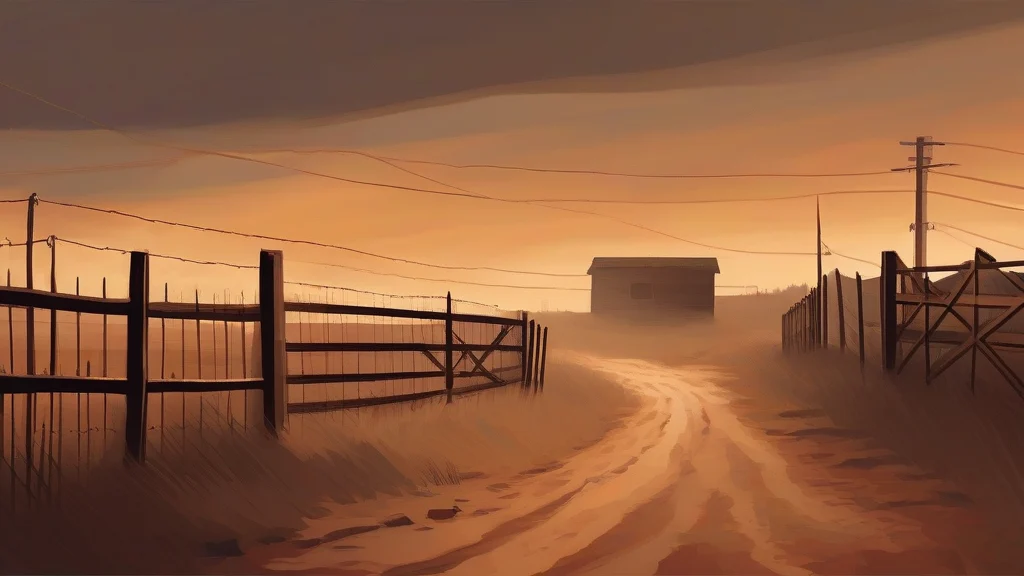
What does unfenced mean?
Unfenced describes something that is not enclosed or secured by a fence. Its most common use is geographical: people speak of unfenced land, pasture, roads, fields, or areas, especially where animals can wander freely or there is no visible boundary. The word can also have a figurative meaning, describing a person, idea, or situation that is not restricted by rules, conventions, or ordinary limits. In this sense, it may suggest independence and creativity, but it can also imply disorder or a lack of protection. Unfenced is especially useful when the absence of a physical barrier is significant, whether literal or metaphorical. It belongs to the ordinary English vocabulary of landscape description, while its figurative applications add a sense of openness, freedom, and possibility.
adjectiveNot enclosed, secured, or separated by a fence; by extension, not subject to an external restriction or control.
- Not enclosed or protected by a fence.
- Figuratively, free from restriction, limitation, or external control.
"The old horse grazed peacefully in an unfenced meadow beyond the village."
"The cattle wandered across the unfenced pasture before the farmer found them."
"Her unfenced imagination filled the margins of the page with strange new worlds."
A fence defines a boundary; “unfenced” removes the boundary—and sometimes the limits themselves.
Reviewed by Deb Chak, Editor. AI-assisted content curated by RJS Tech Solutions LLP.
Where does unfenced come from?
Unfenced is an English adjective formed from the prefix un-, meaning “not,” and the word fence. Fence derives through Old French from Latin defendere, “to defend,” placing unfenced in the same etymological family as defence, defend, and defensive. The negative prefix turns that idea of protection or enclosure into its opposite.
How unfenced is actually used
The literal sense is most common for land, roads, fields, and other outdoor spaces. The figurative sense is less frequent and can suggest a lack of restraint or control, often with a mildly critical or imaginative tone.