
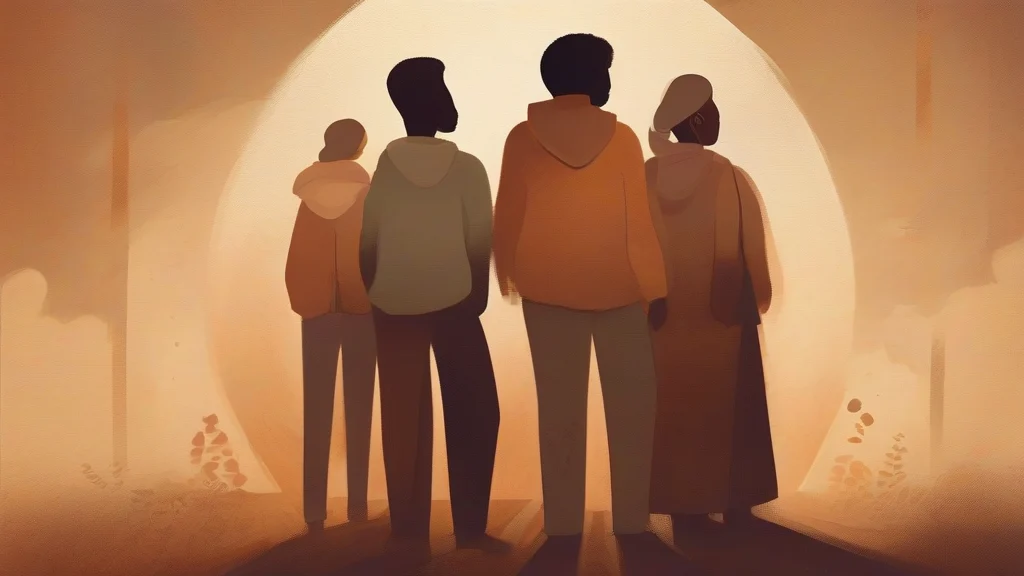
What does unity mean?
Unity means being joined together as one, and it most often describes the state of agreement and cooperation among people who share interests, values, or goals. It can refer to national unity, unity within a community, or unity of purpose among members of a group. The word does not necessarily imply that everyone is identical; rather, it suggests that different people can coexist and work together harmoniously. In art, architecture, and design, unity has a more technical meaning: the quality of elements forming a coherent, complete whole. Unity also carries a positive emotional association with solidarity, stability, and collective strength. Its closely related meaning of wholeness comes from its history: the word ultimately derives from the Latin unus, meaning “one.” In everyday use, unity contrasts with division, conflict, and isolation, making it especially useful when describing groups, institutions, and shared social goals.
nounUnity is the state of being united or joined as one, especially through shared interests, values, or goals. It also refers to agreement, harmony, and the quality of forming a coherent whole.
- The state of being joined together as one, especially through shared interests, values, or goals.
- Agreement, harmony, or peaceful cooperation among people or groups.
- The quality of a work, design, or idea forming a coherent and complete whole.
- The mathematical number one, also called unity.
"The leader appealed for unity in the face of a difficult national crisis."
"The community project was built on unity of purpose and mutual trust."
"The architect achieved a striking unity of form by combining the new building with the surrounding landscape."
The standard plural form is unities, though plural use is uncommon outside specialized or formal contexts.
"The philosophical concept of the unities has long shaped discussions of art and literature."
From a Latin word meaning “one,” unity has become a symbol of people finding strength not by becoming identical, but by remaining united despite their differences.
Reviewed by Deb Chak, Editor. AI-assisted content curated by RJS Tech Solutions LLP.
Where does unity come from?
Unity comes through Middle English from Old French unité, which was borrowed from Latin ūnitās, a noun derived from ūnus, meaning “one.” The same Latin root appears in related English words such as unit, unite, and unify, all expressing the joining or singleness suggested by unity. In its earliest uses, the word referred to the condition or principle of being one; its modern sense of agreement and harmonious cooperation developed from that foundational meaning.
Related word forms
How unity is actually used
Unity is usually formal or neutral in register and often carries a positive connotation, suggesting cooperation, solidarity, and common purpose. In artistic or theoretical contexts, it can refer more generally to the coherence of a work, design, or system.
Easily confused with unity
Unity emphasizes the state of being joined harmoniously, whereas union primarily denotes the act or result of joining two or more people, groups, or things.