
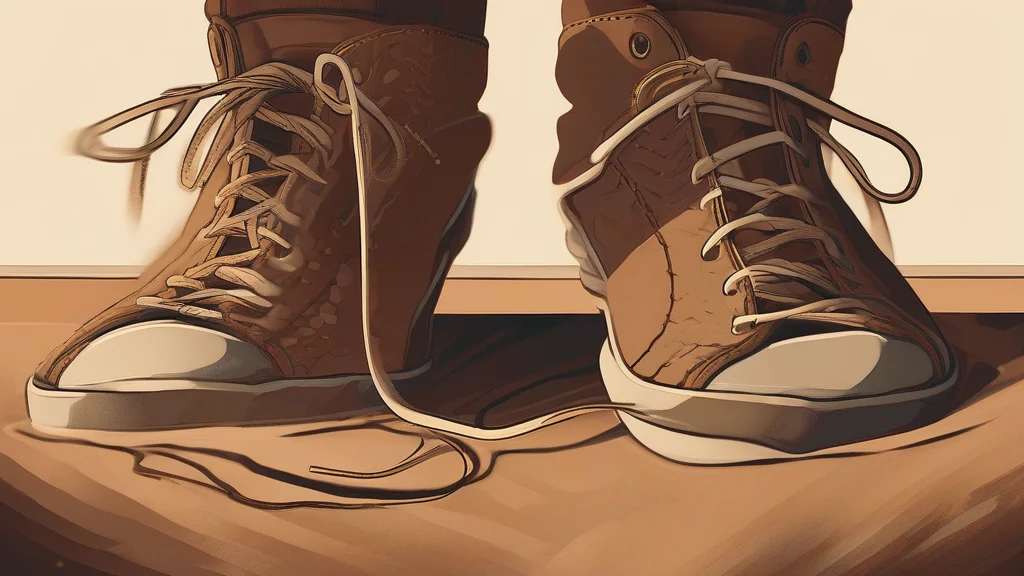
What does unlaced mean?
Unlaced is an adjective for something whose lace or laces are not tied or fastened, especially footwear. It can also describe a garment that has been left open at its fastening, although that use is less frequent. In the phrase unlaced shoes, the word usually implies that the shoes are being worn or handled with their laces loose rather than fully secured. Unlaced also serves as the past tense and past participle of the verb unlace, as in “she unlaced her boots.” The form is straightforwardly built from un-, meaning “not” or “undoing,” and lace, the fastening associated with shoes and some garments. Its literal image is useful: an unlaced shoe is secure enough to wear but no longer tightly fastened. Though the word sounds old-fashioned or literary in some descriptions, it remains natural in clothing, fashion, and historical writing. It is especially associated with British and American usage rather than being restricted to one region. Overall, unlaced captures the distinction between footwear that is present and usable and footwear whose fastening has deliberately or casually been loosened.
Not tied or fastened; having a lace or laces undone.
"The unlaced shoes sat beside the threshold."
Most often used of shoes, boots, and garments secured with laces.
Past tense and past participle of unlace: to loosen or undo the lace or laces of something.
"He unlaced his hiking boots and eased his feet out."
The transitive verb describes undoing a fastening, especially on footwear or garments.
A shoe can be fully on and still unlaced: unlaced names the undone fastening, not the absence of footwear.
Reviewed by Deb Chak, Editor. AI-assisted content curated by RJS Tech Solutions LLP.
Where does unlaced come from?
Unlaced is formed from the prefix un-, meaning “not” or the reversal of an action, combined with lace and the participial ending -ed. The word lace entered Middle English through Old French forms ultimately derived from Latin laqueus, meaning “noose” or “snare.” The closely related words lacing and lacy belong to the same lexical family.
Related word forms
How unlaced is actually used
The adjective is especially natural in descriptions of footwear and clothing. It can sound literary or old-fashioned when applied broadly, though it is not restricted to formal writing.