
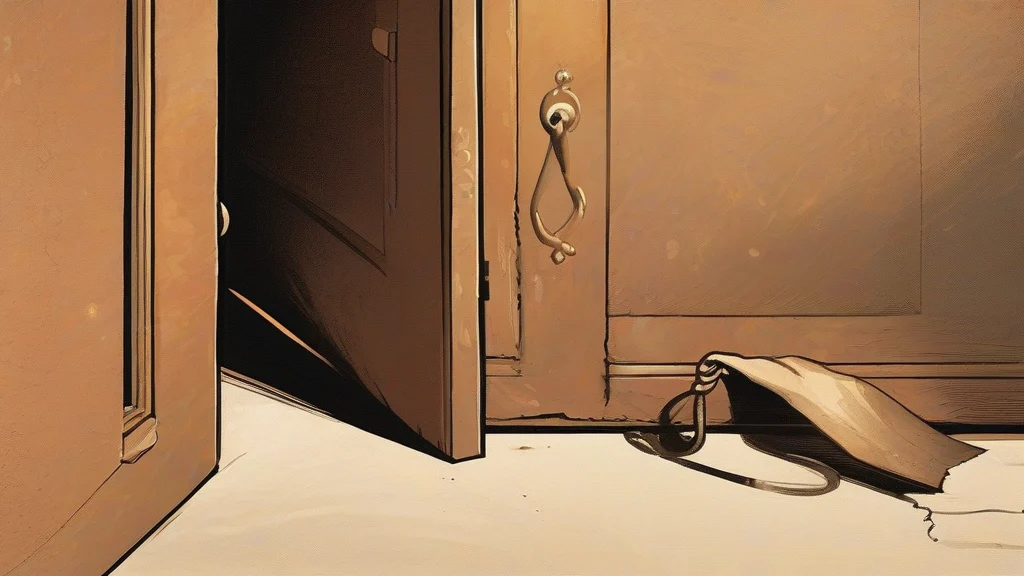
What does unlatching mean?
Unlatching is the act of releasing a latch so that a door, gate, window, chest, or similar object can be opened. It can be transitive, as when someone unlatches a gate, or intransitive, as when a door unlatches and swings open. Although its meaning is literal, “unlatching” is also used figuratively for the sudden release of a restriction, tension, or emotional restraint. The word belongs to everyday English but is less common than “opening” or “unfastening,” and it is especially evocative in descriptions of gates, doors, and containers. Its clear formation from “un-” and “latch” reflects the basic contrast between securing a fastening and letting it go. Using the word precisely distinguishes releasing a mechanical catch from merely opening an unlocked door: a door can be open while its latch still engages the frame. That small distinction makes “unlatching” particularly useful in descriptive and figurative writing.
verbTo release or undo the latch securing a door, gate, window, or other object; also intransitively, to become open by the release of a latch.
- To release or undo a latch, allowing a door, gate, window, or other object to open.
- To become open through the release of a latch.
"She reached for the iron handle and carefully unlatched the garden gate."
"He unlatched the window and let the warm evening air into the room."
"The heavy gate creaked as it unlatched and swung inward."
A latch holds a door shut; unlatching turns one small movement into freedom.
Reviewed by Deb Chak, Editor. AI-assisted content curated by RJS Tech Solutions LLP.
Where does unlatching come from?
Unlatching is an English formation in un- + latch, with the verb developed during the Early Modern English period. Latch is an Old English word for a securing bar or fastening, and transparent compounds include latchbolt and latchkey. The prefix un- expresses reversal, while the ending -ing forms a gerund and present participle.
Related word forms
How unlatching is actually used
The word is standard in both British and American English. It is more specific than “opening,” because it indicates that a mechanical catch or fastening has been released. Figurative uses often suggest the loosening of a restriction or emotional restraint and may have a slightly literary or descriptive tone.
Easily confused with unlatching
Unlatching releases a latch or fastening, whereas unlashing frees something secured by ropes or cables.