
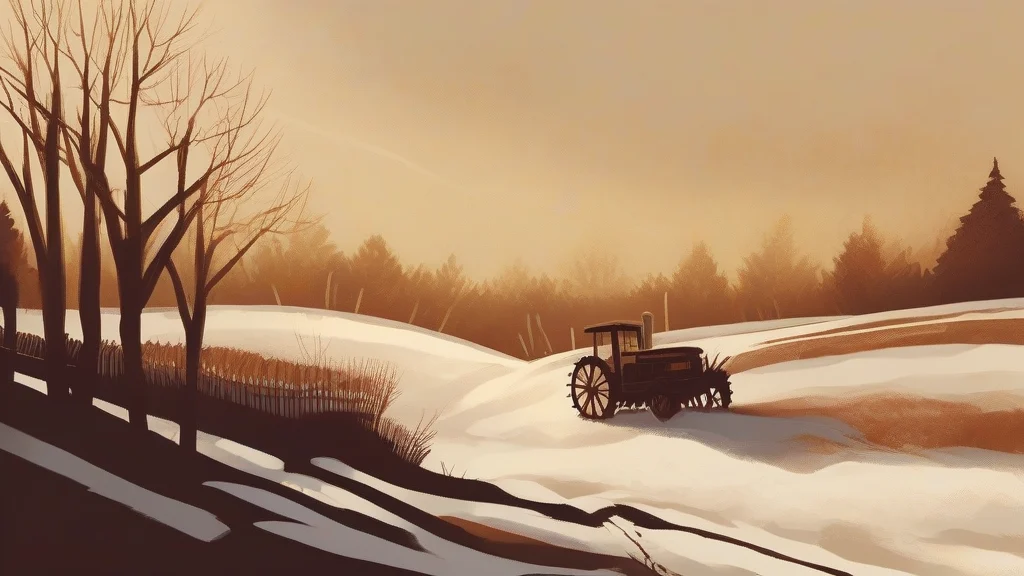
What does unplowed mean?
Unplowed means that land has not been plowed, or broken up and turned over with a plow. It is especially associated with agricultural land that remains fallow, untilled, or covered with wild vegetation. The word does not necessarily mean that the land has never been farmed: a field can be described as unplowed simply because it has not been prepared for a particular planting season. “Unplowed” is the standard spelling in American English, while British English generally uses “unploughed.” In ordinary writing, the term conveys a clear contrast between land that has been worked and cultivated and land left in its existing state. Because plowing traditionally marks the boundary between untouched ground and prepared farmland, the word also carries symbolic associations of potential, natural growth, and an unaltered landscape.
adjectiveNot having been plowed; untilled or lying fallow, especially a field or piece of land.
- Not plowed or cultivated; left as untilled or fallow land.
"Wildflowers appeared across the unplowed field."
"After the autumn harvest, several fields lay unplowed through the winter."
"The farmer decided to leave that narrow strip unplowed so that native grasses could flourish."
“Unplowed” preserves a familiar spelling clue: Americans say plow, while British English usually says plough—even in the negative.
Reviewed by Deb Chak, Editor. AI-assisted content curated by RJS Tech Solutions LLP.
Where does unplowed come from?
Unplowed is formed in English from the Old English negating prefix un-, meaning “not,” and plow, a Middle English word borrowed from Old Norse plógr. The same Germanic root appears in English forms such as plough, plowshare, and plowman, while the British spelling preserves the traditional distinction between the forms “plow” and “plough.” The resulting adjective denotes ground that has not undergone the agricultural action of plowing.
How unplowed is actually used
The word is fully standard in North American English and can describe land left untouched deliberately or land that has merely not been plowed recently. In figurative use, it may suggest natural potential, neglect, or a landscape that retains an undeveloped character.
Easily confused with unplowed
“Unploughed” is the usual British English spelling, whereas “unplowed” is standard in American English.