
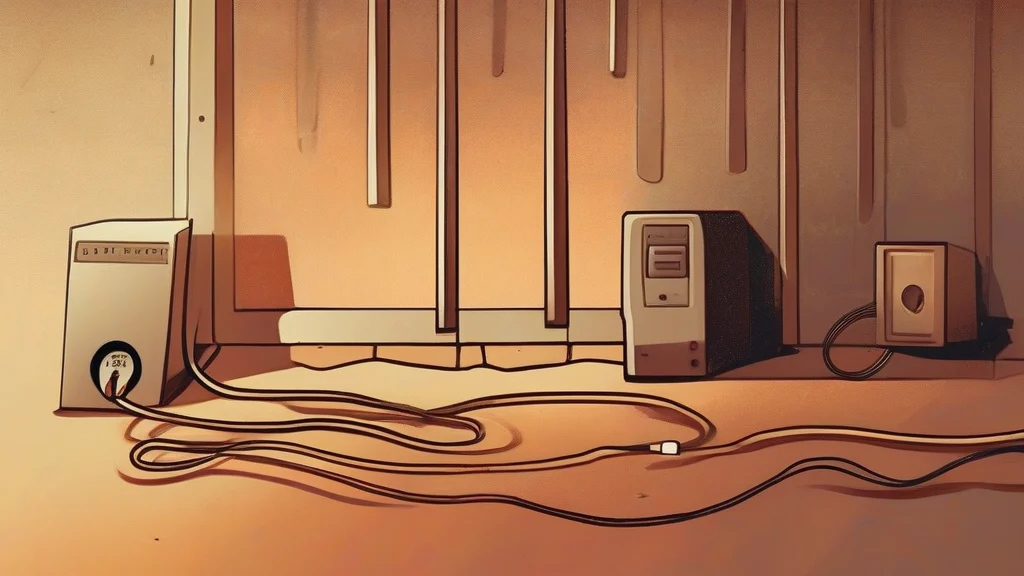
What does unplugging mean?
Unplugging is the present participle and gerund of unplug, meaning to disconnect something from a power source or socket. In its literal sense, it refers to activities such as unplugging a laptop, television, charger, or other appliance. The word also has a figurative meaning: unplugging from technology, work, social media, or constant communication. In this usage, unplugging suggests creating distance from the demands and distractions of connected life, often with a sense of rest, privacy, or renewed attention. The expression is particularly common in contemporary discussion of digital wellbeing, travel, and workplace boundaries. Although the verb is straightforward and widely understood, the figurative form carries the broader implication of choosing temporary separation rather than merely turning an object off.
To disconnect a device or appliance from a power source or electrical socket; figuratively, to withdraw from technology, work, or social involvement.
"They unplugged the router before repairing the network cables."
Common in both literal and figurative contexts. The verb is normally used transitively, as in unplug a device or unplug yourself from the conversation.
The act of disconnecting something from a power source, or of withdrawing from technology, work, or social involvement.
"Daily unplugging helped her focus during the busy season."
This gerund noun is often uncountable when referring to the general activity, though plurals are grammatically possible.
Rare in ordinary usage; the singular form is normally used when referring to the general activity or a single instance.
"The unpluggings were scheduled for the end of each workday."
Unplugging can mean switching off a device, switching off notifications, or temporarily escaping the demands of modern life.
Reviewed by Deb Chak, Editor. AI-assisted content curated by RJS Tech Solutions LLP.
Where does unplugging come from?
Unplugging is an English verb formation based on plug, with the prefix un- expressing reversal or separation and the suffix -ing indicating an ongoing action or gerund. The related forms unplug, unplugged, and unplugging belong to the same modern English word family; the exact early history of plug is less important here than the clearly compositional development of unplug. The word’s meaning expanded naturally from physical disconnection to figurative disengagement from technology or social life.
Related word forms
How unplugging is actually used
The word is common in everyday British and American English. Its literal use is standard and practical, while the figurative use often implies a deliberate retreat from constant connectivity or distraction. It is usually transitive when used as a verb: people unplug a device, not unplug it from a device.