
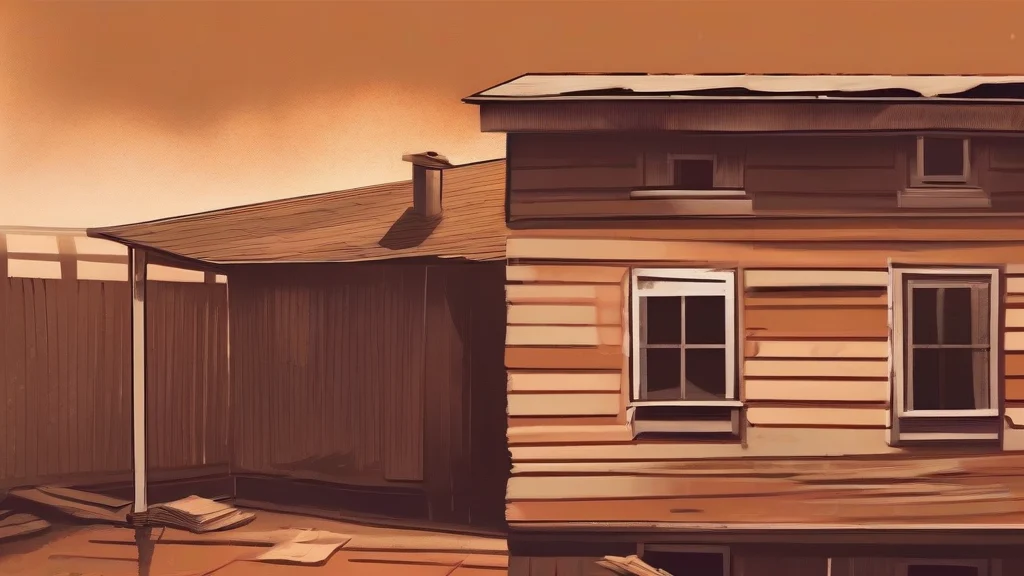
What does unroof mean?
Unroof means to remove the roof from a building or another structure, leaving it exposed to the sky. The verb is especially associated with construction, restoration, demolition, and the installation or repair of structural elements. Its literal use is vivid because it focuses on a decisive physical action: the protective top of a structure is taken away, revealing its framework and interior. Unroof can also function as a metaphor for removing a covering or uncovering something hidden, as when a writer describes unroofing a city or institution to expose its concealed histories. Although relatively uncommon in everyday speech, the word is precise where a more general term such as uncover might obscure the specific idea of removing a roof. It belongs primarily to formal, architectural, and literary English rather than casual conversation.
verbTo remove the roof from a building or other structure, leaving it open to the sky. It can also be used figuratively to strip away a covering or reveal what was concealed.
- To remove the roof from a building or other structure, leaving it open to the sky.
- To strip away a covering or reveal something that was concealed.
"The restoration team will carefully unroof the historic building before repairing its timber frame."
"Engineers unroofed the warehouse to install a new ventilation system."
"The novelist uses the metaphor of unroofing the city to expose the secrets beneath its respectable surface."
Unroof is literal at its most dramatic: remove the top and expose what lies beneath.
Reviewed by Deb Chak, Editor. AI-assisted content curated by RJS Tech Solutions LLP.
Where does unroof come from?
Unroof was formed in English by combining the negative prefix un- with roof. The noun roof comes from Old English rōf and is related to words such as Dutch roof and German Roof, all reflecting a Germanic source. The prefixed verb developed with the straightforward meaning of removing a roof or making a structure roofless.
How unroof is actually used
The literal sense is chiefly architectural or construction-related. Figurative uses are literary and emphasize exposure, vulnerability, or revelation.