
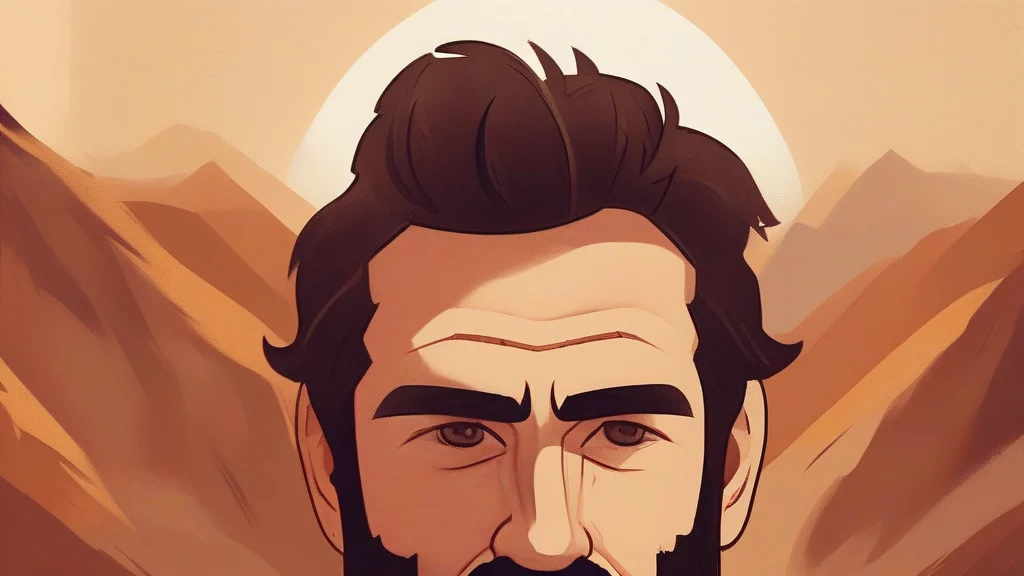
What does unshaven mean?
Unshaven is an adjective describing a person whose face has beard or stubble rather than being completely shaved. It is most often used in the context of facial hair: an unshaven man may have visible stubble, a short beard, or simply have avoided shaving that morning. The word is neutral in itself, although it can sometimes carry a mild implication of informality or being slightly dishevelled. It is especially useful when a speaker wants to distinguish a face with some remaining hair from a clean-shaven one, or to describe someone who has not recently shaved without suggesting that they are wearing a full beard. In everyday use, “unshaven” is precise and natural, while “unshaved” is also possible but less common.
adjectiveHaving a beard or stubble rather than being clean-shaven; not having been shaved.
- Having facial hair or stubble rather than being clean-shaven.
"He arrived with an unshaven face and rumpled clothes after the long drive."
"She looked tired and unshaven after spending the night at the hospital."
"The interviewer apologized for appearing unshaven on the early-morning broadcast."
An unshaven face has not lost all its hair; it has simply declined to be clean-shaven.
Reviewed by Deb Chak, Editor. AI-assisted content curated by RJS Tech Solutions LLP.
Where does unshaven come from?
Unshaven was formed in English by adding the prefix un- to shaven, following the ordinary English pattern of forming an opposite or negative adjective. Shaven comes from Old English sceafan, meaning “to shave,” with related forms in other Germanic languages. The word therefore belongs to the same broad Germanic family as modern English “shave,” “shaven,” and “shaver.”
How unshaven is actually used
The word is neutral in register and is especially common when describing a beard or stubble. It can sometimes suggest informality, casualness, or a lack of attention to grooming, but it can also be used without criticism.
Easily confused with unshaven
Shaven means shaved, usually referring to a face without beard or stubble, whereas unshaven means that some facial hair remains.