
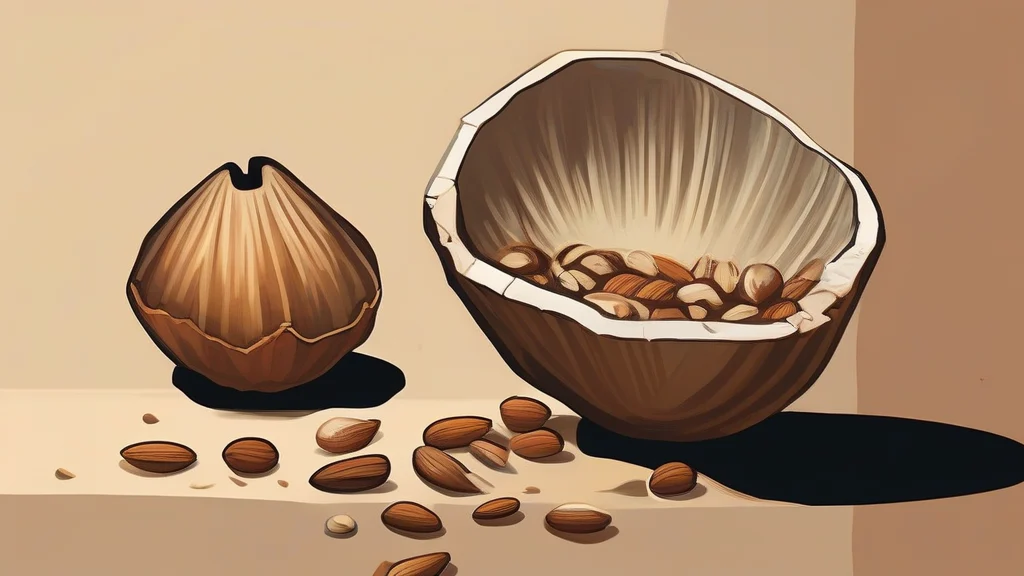
What does unshelling mean?
Unshelling is the gerund and present participle of unshell, meaning to remove a shell, casing, or protective outer covering. Its literal use is especially associated with taking apart objects, packages, natural specimens, or technical equipment whose outer layer must be removed before the contents can be examined. Because the word directly reverses the idea of enclosing something in a shell, it can also be used figuratively to describe revealing hidden information, assumptions, or consequences. Unshelling is less common than forms such as shelling and unpacking, but it is especially clear when the outer layer is protective or physically distinctive. The word is formed through a transparent English combination of shell and the prefix un-, so its meaning can usually be understood even when it is encountered for the first time.
verbTo remove a shell, casing, or other outer covering from something. The word can also be used figuratively for exposing or revealing what was enclosed or protected.
- Removing a shell, casing, or protective outer covering; by extension, exposing or revealing something previously enclosed.
"The workers spent the morning unshelling the equipment before inspecting the inner components."
"They spent the morning unshelling the crates and checking the contents."
"The report effectively unshells the proposal by revealing the assumptions behind it."
Add “un-” to “shell,” and an outer layer becomes an opening.
Reviewed by Deb Chak, Editor. AI-assisted content curated by RJS Tech Solutions LLP.
Where does unshelling come from?
Unshelling is formed from the English word shell and the productive prefix un-, which indicates reversal or removal. Shell comes from Old English scell, an inherited Germanic word for the hard outer covering of an object or organism. In modern English, adding un- creates the verb unshell and its gerund or present-participle form unshelling, with forms such as shelled and shelling belonging to the same wider word family.
Related word forms
How unshelling is actually used
Unshelling is relatively uncommon and is more likely to appear in descriptive, technical, or figurative writing than in everyday conversation. The literal sense is more transparent than the figurative one.
Easily confused with unshelling
Unshelling means removing an outer shell or casing, whereas shelling can mean putting a shell around something, firing artillery, or removing a shell in a different technical sense.