
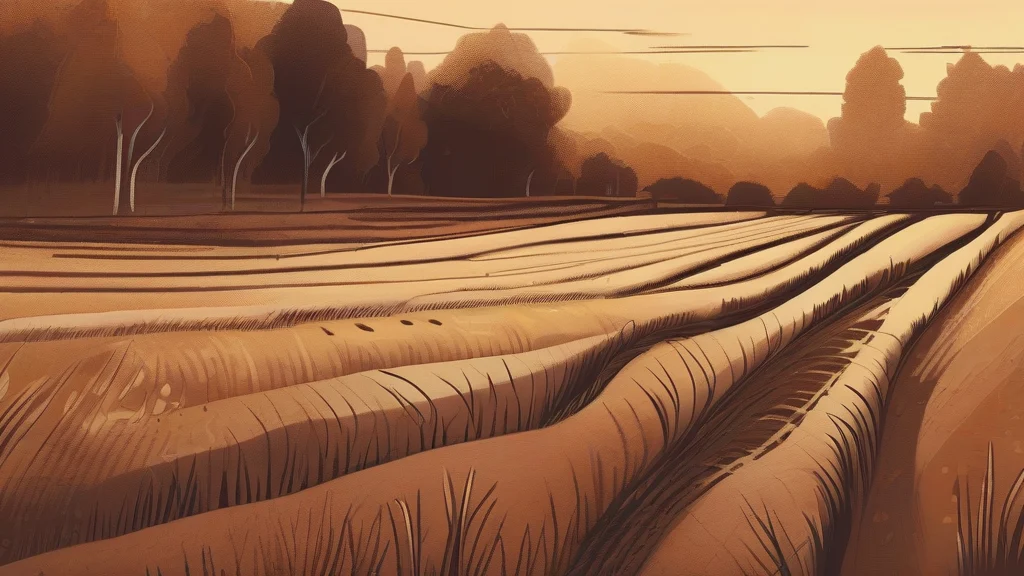
What does unsown mean?
Unsown is an adjective meaning that land or a field has not been sown, or planted with a crop. It is especially associated with agricultural land that has been deliberately left without seed, although it can also describe fields abandoned because of poor weather, flooding, or other circumstances. The word is more specific than terms such as uncultivated, since it focuses on the absence of sowing rather than on every kind of agricultural neglect. In landscape descriptions and figurative writing, unsown ground may also suggest inactivity, lack of development, or the possibility of a future harvest. An unsown field is therefore not necessarily barren or damaged: it may simply await planting. The word is most natural when describing a field, plot, patch, or expanse of land, and it can appear both in ordinary reporting about farming and in more evocative literary contexts.
adjectiveNot sown or planted with a crop; left without seed.
- Not sown or planted with a crop.
"After the storm, several acres of the field lay unsown."
"The farmer left the northern field unsown because the soil was too wet."
"Unsown acres beside the motorway remain a reminder of the area's agricultural past."
Reviewed by Deb Chak, Editor. AI-assisted content curated by RJS Tech Solutions LLP.
Where does unsown come from?
Unsown was formed in English by adding the productive prefix un-, meaning “not,” to the past participle sown. Sown is the irregular past participle of sow, an Old English agricultural verb whose deeper roots are shared with Latin semen, “seed,” and with English words such as seminal and sower. The literal formation of unsown therefore expresses the simple idea “not sown.”
How unsown is actually used
Typically used attributively before a noun or predicatively after a linking verb. It normally refers to land or fields rather than to individual seeds.
Easily confused with unsown
Unsown means that land has not been planted with a crop, whereas unsound means defective, unreliable, or not healthy.