
What does utriculus mean?
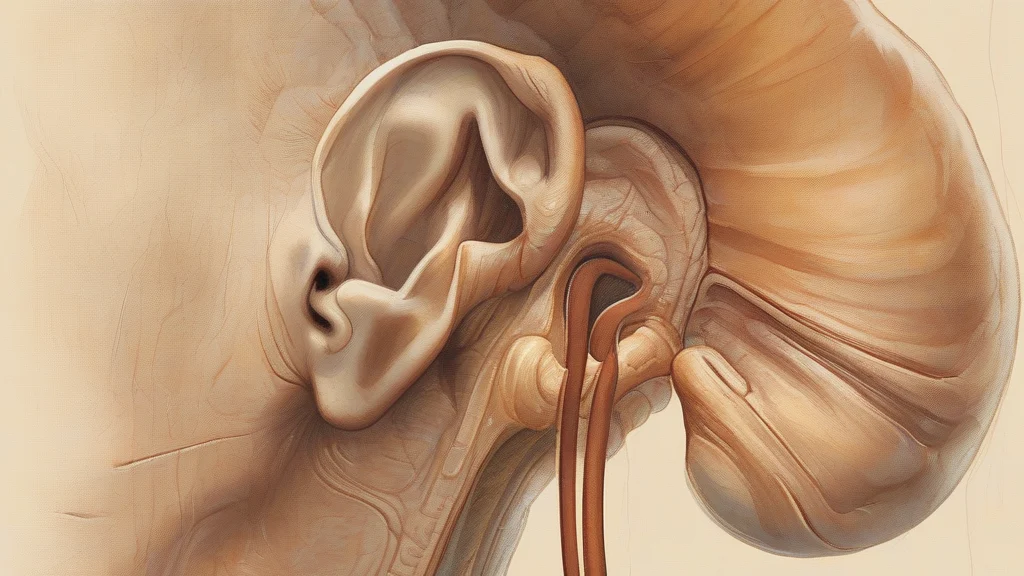
A utriculus is a small sac-like anatomical structure. Its best-known referent is the utricle of the inner ear, one of the organs of the vestibular system. Together with the saccule and the semicircular canals, it helps the brain maintain balance and determine the position and movement of the head. The utriculus is especially sensitive to head tilt and horizontal linear acceleration, such as the motion experienced when a person accelerates in a car. In anatomical terminology, “utriculus” can also refer more generally to a small pouch or sac, including the prostatic utricle within the prostatic urethra. The word is relatively uncommon outside specialist contexts, so listeners may sometimes mistake it for “utricle,” its familiar English equivalent, or for “saccule,” a different balance organ. Although rare in everyday speech, the utriculus is significant because subtle disturbances of its function can contribute to dizziness, imbalance, and vertigo.
nounA utriculus is a small sac or pouch, especially the utricle of the inner ear, a sensory organ involved in balance and the perception of head position.
- The utricle of the inner ear, a vestibular organ that helps detect head tilt and horizontal linear acceleration.
- A small sac or pouch in anatomical terminology.
- The prostatic utricle, a small epithelial structure in the prostatic urethra.
"The utriculus helps the brain detect head tilt and horizontal acceleration."
"Damage to the utriculus can impair the sense of balance and contribute to vertigo."
"The utriculus prostaticus is a small structure located within the prostatic urethra."
The standard Latinized plural is used in anatomical writing, especially when referring to the paired inner-ear organs.
"The vestibular apparatus includes the utriculi and the sacculi."
The inner ear's utriculus is a tiny balance organ that helps the brain read head tilt and horizontal motion.
Reviewed by Deb Chak, Editor. AI-assisted content curated by RJS Tech Solutions LLP.
Etymology of utriculus
Utriculus is the Latin diminutive of uter, meaning a skin or leather bag, with the suffix -culus indicating a smaller sac or pouch. The Latin form was adopted into English in anatomical usage, where it developed the specialized meaning of the inner-ear utricle. Its relatives include uterine and uterus, which continue to reflect the same Latin root.
Related word forms
How utriculus is actually used
This is a specialized anatomical term used mainly in medicine, biology, and comparative anatomy. In modern usage, it most often refers to the inner-ear utricle; “utriculus prostaticus” is the established term for the structure in the prostatic urethra.
Easily confused with utriculus
The saccule is a separate balance organ of the inner ear that detects vertical linear acceleration, whereas the utriculus primarily detects horizontal acceleration and head tilt.
“Utricle” is the usual English anatomical name, while “utriculus” is the corresponding Latin form and may also identify a small sac in another anatomical context.