
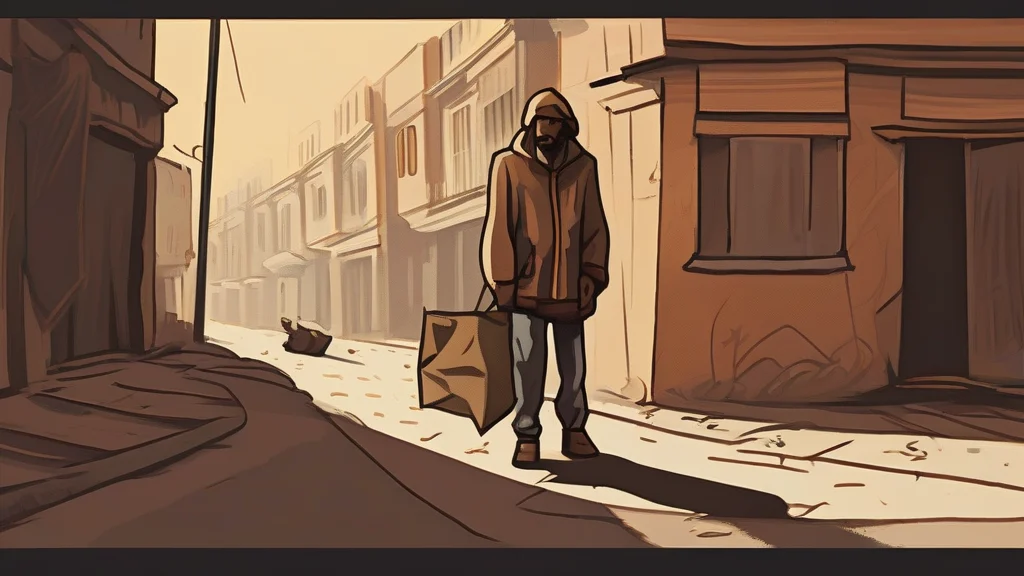
What does vagrancy mean?
Vagrancy is the state or practice of wandering without a fixed home or settled way of life. It may describe itinerancy, rootlessness, or a life spent moving from place to place, and it is also used in relation to homelessness and people living on the margins of society. The term has legal and social significance: governments and municipalities have historically used vagrancy laws and charges against people perceived as having no settled occupation or residence. In contemporary writing, vagrancy can be descriptive or literary, as in accounts of travel, poverty, or social exclusion, but it may carry a negative or stigmatizing connotation. Understanding the word involves recognizing both its ordinary meaning and its historical association with the criminalization of mobile or homeless people.
nounThe state or practice of wandering from place to place without a fixed home or settled way of life. In modern usage, it often refers to homelessness or the absence of a stable residence, sometimes in a legal or social context.
- wandering from place to place without a fixed home or settled way of life
- the condition of lacking a stable residence, often considered in legal or social terms
"The novel explores vagrancy through the lives of people living on the margins of the city."
"The novel explores vagrancy through the lives of people living on the margins of the city."
"A period of vagrancy and travel shaped the writer's understanding of freedom and belonging."
The plural is uncommon; vagrancy is usually treated as an uncountable noun, though the plural appears in formal and legal contexts.
"Some legal codes criminalized vagrancies rather than treating homelessness itself as the offense."
Vagrancy is more than homelessness: it evokes the older, starker condition of having no settled home and the history of laws that criminalized people on the move.
Reviewed by Deb Chak, Editor. AI-assisted content curated by RJS Tech Solutions LLP.
Where does vagrancy come from?
Vagrancy entered English in the early 17th century, deriving through French from Latin vagari, meaning “to wander.” Its ultimate root is the Latin vagus, meaning “wandering” or “roving.” The same root also underlies related English words such as vagrant, vagabond, and vagary.
How vagrancy is actually used
The word is formal and can sound disapproving, particularly when used in legal or administrative contexts. Vagrancy is not exactly synonymous with homelessness: it can imply itinerancy or a life without a settled home, whereas homelessness primarily denotes the absence of stable accommodation.
Easily confused with vagrancy
Vagrancy means wandering or lacking a settled home, whereas a vagary is an unusual, unpredictable idea or whim.