
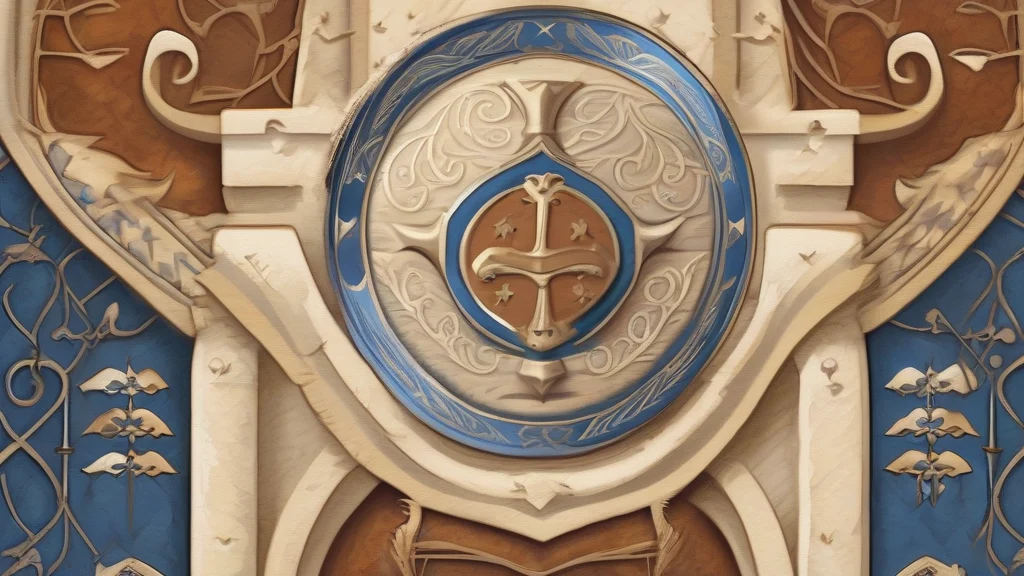
What does vair mean?
In modern English, vair is a specialized heraldic noun denoting a fur represented by a repeating pattern of alternating blue and white bell-shaped forms, conventionally described as azure and argent. Historically, the word referred to the varied fur of squirrels, which supplied the model for the heraldic design. Vair is used by heraldists, armorers, art historians, and readers of armorial descriptions when identifying or discussing coats of arms. It is not a general word for decoration, nor a synonym for fur in ordinary speech. Its connection with words such as various and variety is etymological: through Old French, vair derives from Latin varius, meaning varied or variegated. Although its pronunciation may suggest the unrelated modern word veer, vair belongs firmly to the vocabulary of heraldry and historical costume. Its rarity gives it an antiquarian flavor, but within its technical context the word is precise and useful.
nounIn heraldry, a fur represented by a repeating pattern of alternating blue and white bell-shaped forms, traditionally azure and argent. Historically, the term also referred to the variegated fur of squirrels from which the heraldic pattern was derived.
- A heraldic fur or pattern formed by alternating blue and white bell-shaped areas; historically, also the variegated squirrel fur represented by this pattern.
"The escutcheon bears a field of vair, with alternating blue and white bell shapes."
"The escutcheon bears a field of vair, with alternating blue and white bell shapes."
"The historical inventory describes the ceremonial garment as lined with vair, a costly variegated fur."
The plural is uncommon; vair is more often used as an uncountable heraldic term.
"Two vairs of alternating blue and white were painted on the shield."
A coat of arms can turn vair into a blue-and-white bell pattern, making heraldry look almost like tilework.
Reviewed by Deb Chak, Editor. AI-assisted content curated by RJS Tech Solutions LLP.
Etymology of vair
Vair entered Middle English from Anglo-French and Old French vair. Old French vair referred to varied or variegated squirrel fur and came from Latin varius, meaning varied. The English heraldic sense developed from this earlier reference to the fur and its characteristic appearance.
How vair is actually used
This is a rare, specialist term used chiefly in heraldry and the study of historical costume and arms. In ordinary speech, it should not be used as a general synonym for fur or decoration.
Easily confused with vair
Veer means to turn or change direction, whereas vair is a heraldic fur pattern.
Vairé is a related heraldic pattern, conventionally composed of alternating red and white rather than the blue and white of vair.