
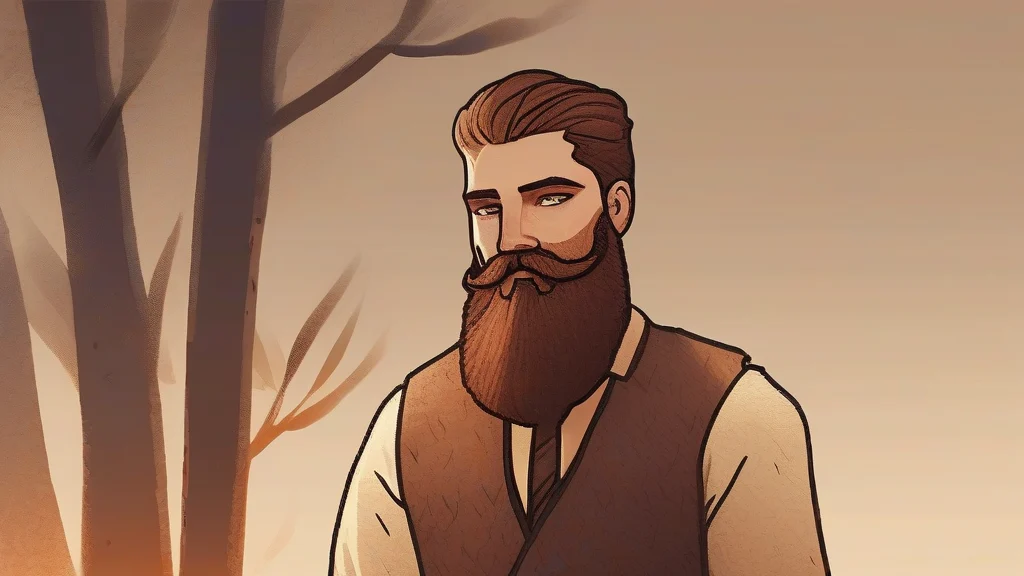
What does vandyke mean?
Vandyke is an English noun with two related historical senses. Its principal sense is a fashionable pointed lace collar, especially one with broad, hanging points, associated with European dress in the 17th century and with portraits by Anthony van Dyck. The same name also denotes a pointed beard, traditionally a narrow tuft extending from the chin. In modern English both uses are chiefly historical or literary, although the word can still appear in costume and art history, fashion, and descriptions of facial hair. It carries a strong period association: it evokes lace, pointed shapes, courtly fashion, and the visual conventions of old-master portraiture. It is therefore more distinctive and evocative than a general word for collar or beard. The term ultimately derives from the Van Dyke or Van Dyck name and Dutch vocabulary connected with a dike. Vandyke is especially useful when precision matters about the shape of a collar or beard and when the historical or artistic context is relevant.
nounA pointed lace collar, especially one with deep, hanging points. It can also denote a pointed beard, particularly a narrow tuft extending from the chin.
- A lace collar with deep, pointed or hanging flaps, fashionable in the 17th century.
- A pointed beard consisting of a narrow tuft extending from the chin.
"The portraitist carefully rendered the sitter's white vandyke against a dark velvet doublet."
"Her costume included a broad vandyke that framed her face in white lace."
"He was known for his neatly trimmed vandyke and extravagant moustache."
The plural is used when referring to multiple collars or beards of this distinctive type.
"The collector's cabinet contains several lace vandykes from the 17th century."
A vandyke preserves the pointed lace collars and theatrical beards of 17th-century portraiture in a single distinctive word.
Reviewed by Deb Chak, Editor. AI-assisted content curated by RJS Tech Solutions LLP.
Etymology of vandyke
The word derives from the name Van Dyke, used in the 17th century for fashions associated with the Flemish portrait painter Anthony van Dyck, whose surname is more commonly spelled Van Dyck. The surname contains Dutch van, meaning “from,” and dyck or dijk, a form of the Dutch word for a dike. English dike and dyke and Dutch dijk are cognate with that element of the name.
How vandyke is actually used
Now chiefly historical or literary, though it remains useful in costume and art history and in detailed descriptions of facial hair. The common noun is usually lowercase, while Vandyke is commonly capitalized when naming the historical styles.
Easily confused with vandyke
Vandyke is the common noun for a pointed collar or beard, whereas Van Dyke, often spelled Van Dyck in the painter's surname, refers to the historical family name.