
What does vantbrace mean?
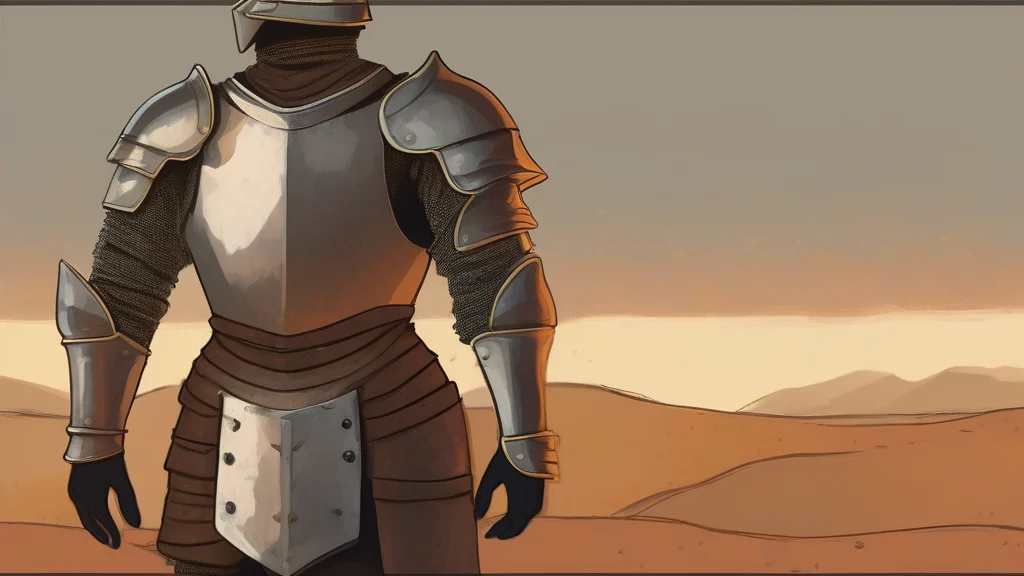
A vantbrace is a protective piece of armour worn over the forearm. Typically made from leather or another tough material, it shields the arm from cuts and blows. The term is chiefly associated with medieval and early modern warfare, although examples survive in museum collections and modern costume, reenactment, and historical fencing. In context, “wearing a vantbrace” is more natural than describing it abstractly. The word is specialist and uncommon in everyday English, so it tends to evoke martial history, craftsmanship, or period costume rather than modern clothing. Knowing the word also helps readers recognize the closely related spelling vambrace. Together, the terms identify a limb guard designed to cover and reinforce the forearm in combat. Despite its specialized register, vantbrace is a clear, vivid example of how vocabulary for protective equipment preserves the history of the body and of warfare.
nounA piece of armour worn over the forearm to protect it from cuts and blows. It was commonly made of leather or similarly protective material.
- A defensive covering or piece of armour for the forearm.
"The knight adjusted the leather vantbrace strapped around his forearm before drawing his sword."
"He wore a riveted metal vantbrace beneath his chain mail."
"The museum display included a pair of leather vantbraces from the medieval period."
The regular plural is used when referring to multiple pieces of forearm armour.
"Two leather vantbraces formed part of the soldier’s equipment."
Its name is almost transparent: French avant-bras literally means “fore-arm,” naming the part of the body the armour protects.
Reviewed by Deb Chak, Editor. AI-assisted content curated by RJS Tech Solutions LLP.
Etymology of vantbrace
Vantbrace comes from the obsolete French avant-bras, literally “fore-arm”: avant means “before” and bras means “arm.” The compound reflects the defensive covering’s position on the body. English also has the closely related form vambrace, a variant spelling ultimately derived from the same French word.
How vantbrace is actually used
This is specialist rather than everyday vocabulary. It is chiefly used in historical, literary, museum, reenactment, and historical-fencing contexts, where it often evokes medieval or early modern warfare.
Easily confused with vantbrace
Vambrace is a variant spelling of the same forearm armour, and the two forms are often used interchangeably.