
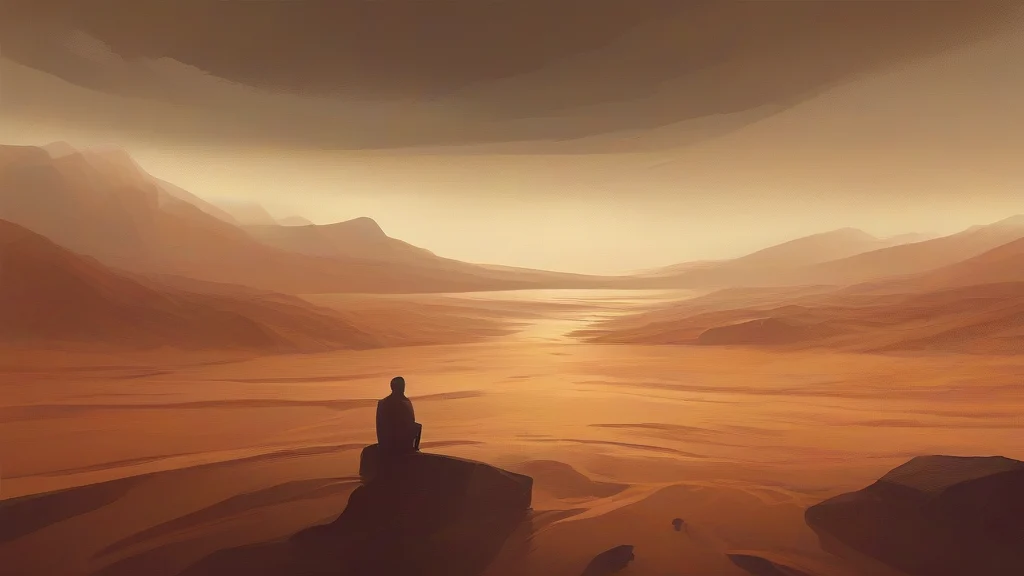
What does vastness mean?
Vastness is a noun meaning extreme greatness in size, extent, amount, or scope. It may refer to an overwhelming physical expanse, as in the vastness of the ocean or outer space, or to the scale of an abstract undertaking, such as the vastness of a historical subject. The word is especially common in formal, literary, and descriptive writing, where it conveys not merely large size but a sense of awe, complexity, or immensity. It can also function as an uncountable noun for the quality of being vast, while the plural vastnesses is occasionally used for distinct immense spaces or expanses. Vastness is closely associated with vast, an adjective now used for exceptionally large or far-reaching things. Because it intensifies the idea of scale, vastness is especially effective when an author wants readers to feel confronted by something immense, inaccessible, or beyond ordinary human comprehension.
nounThe quality of being extremely large in size, extent, or scope; an immense expanse.
- The quality of being extremely large in size, amount, or scope.
- A vast or immense expanse of space.
"Lost in the vastness of the desert, the travellers found the horizon impossibly distant."
"Lost in the vastness of the desert, the travellers found the horizon impossibly distant."
"She tried to comprehend the vastness of the task before accepting it."
The plural is uncommon and is chiefly used when referring to distinct immense spaces or expanses.
"Each expedition charted new vastnesses of the Arctic."
In a single word, vastness can name both the overwhelming scale of something and the immense space it occupies.
Reviewed by Deb Chak, Editor. AI-assisted content curated by RJS Tech Solutions LLP.
Where does vastness come from?
Vastness was formed in early 17th-century English by adding the suffix -ness to vast. Vast had entered English from Latin vastus, an adjective originally meaning “unoccupied” or “empty” and later “immense” or “vast.” Related English forms include the literary noun vastitude and the now archaic adjective vasty.
How vastness is actually used
Vastness is chiefly formal or literary and may describe physical space, natural landscapes, quantities, or abstract challenges such as a task or subject. Its use often conveys awe, difficulty, or an impression of almost limitless scale.
Easily confused with vastness
Vastness means great size or extent, whereas vagueness means a lack of precision or clarity.