
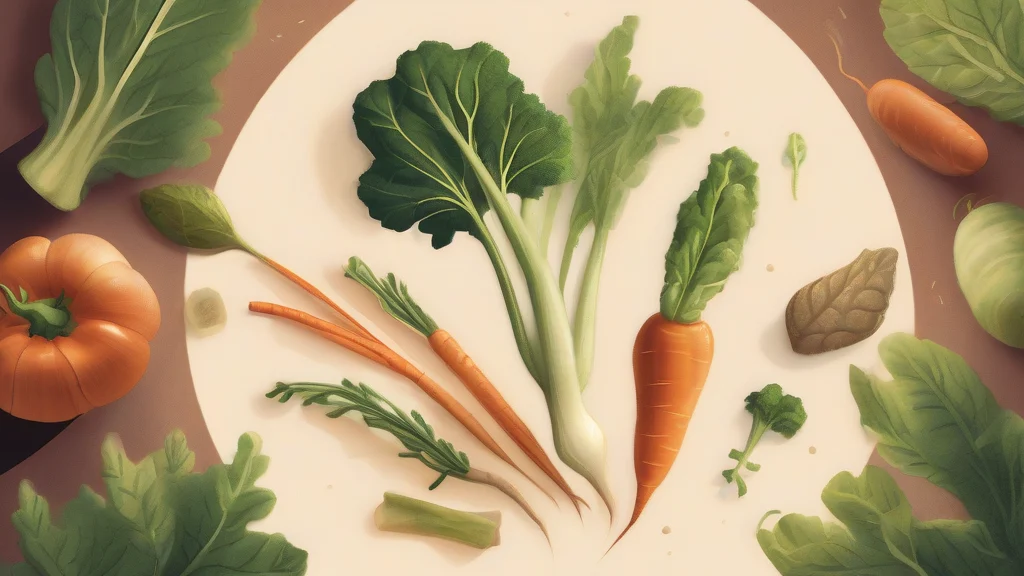
What does vegetable mean?
A vegetable is an edible plant or part of a plant, especially one that is savory and commonly eaten as part of a meal. The category includes familiar foods such as carrots, onions, potatoes, cabbages, and beans, although their classification can vary between culinary traditions and botany. In everyday usage, “vegetable” contrasts with “fruit,” which is usually treated as sweeter and eaten in desserts or as a snack, but the distinction is cultural rather than a strict rule of plant biology. “Veg” and the informal plural “veggies” are widely used in conversation. The word also has a dated figurative sense for a person considered dull, insignificant, or lacking vitality, a usage that can be insulting. Its history connects it to the idea of growth: the English word comes from Latin roots meaning “to grow” and “useful for growth.” The term is useful because it identifies a major group of foods while also reflecting the long-standing connection between plants, nourishment, and the language of cultivation.
nounA vegetable is a plant or part of a plant used as food, especially one that is savory rather than sweet. The word can also be used figuratively for a person regarded as dull, insignificant, or lacking vitality, a sense that is now dated and derogatory.
- An edible plant or part of a plant, especially one used as a savory ingredient in cooking.
- Figuratively, a person regarded as dull, insignificant, or having little vitality; this use is dated and derogatory.
"She roasted a variety of fresh vegetables with garlic and olive oil."
"We should add more vegetables to the soup."
"His description of the negotiations as completely vegetable was deliberately insulting."
The standard plural is “vegetables”; “veggies” is an informal alternative, particularly common in speech.
"Children are often encouraged to eat more vegetables."
The word comes from Latin vegetare, meaning “to grow,” so a vegetable was once literally a “growing” thing.
Reviewed by Deb Chak, Editor. AI-assisted content curated by RJS Tech Solutions LLP.
Where does vegetable come from?
The English noun developed through French from Latin vegetabilis, “growing, lively, useful for growth,” ultimately derived from vegetare, “to grow.” Its early sense referred to living plant matter and later became established for edible plants and plant foods. The same Latin root is reflected in English words such as vegetation, vegetate, and vegetal, all connected with plants or growth.
How vegetable is actually used
The informal plural “veggies” is common in both British and American English. In figurative use, “vegetable” can sound deliberately dismissive and may be offensive when applied to a person.
Easily confused with vegetable
In culinary usage, a fruit is generally sweet and eaten as a snack or dessert, whereas a vegetable is typically savory and treated as a cooked vegetable; botanically, the distinction is based on the plant structure rather than taste.
A vegetable is an edible plant or plant part, while vegetal means relating to plants or plant growth and does not specifically denote food.