
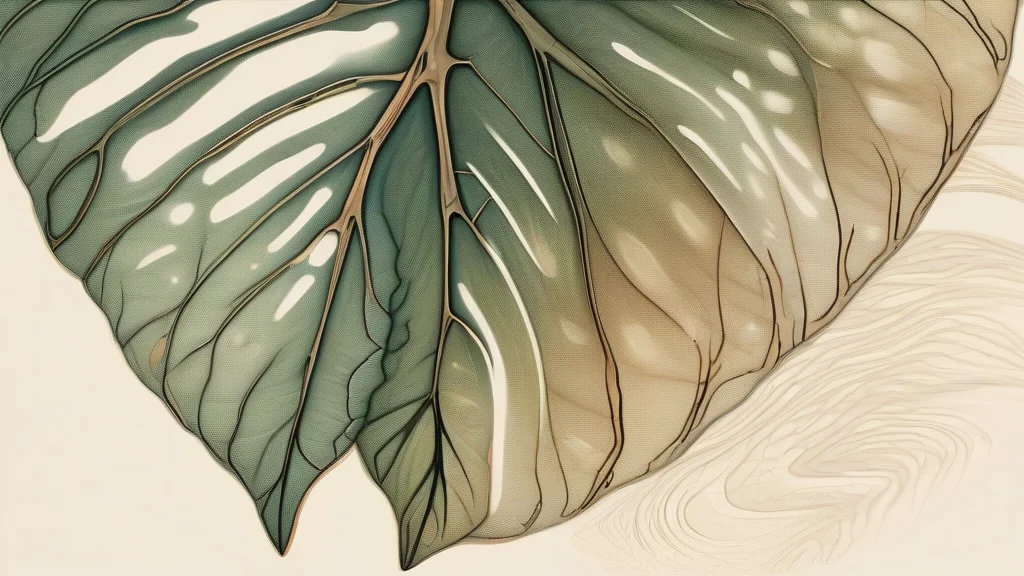
What does veining mean?
Veining is a noun denoting the presence, formation, or arrangement of veins or vein-like markings. It is especially common when describing the branching patterns found in leaves, wood, marble, and other materials, as in “marble veining” or “leaf veining.” The term can describe both an overall visual pattern and the process of producing such lines. In botanical contexts, it refers to the network of veins that supports a leaf and connects its tissues; in decorative or geological contexts, it describes natural or vein-like markings visible on a surface. Although “veining” may sound like the gerund of the verb “vein,” its dominant modern use is as a noun. Distinguishing it from “vein” is useful: an individual vein is one channel or line, while veining refers to the broader arrangement or condition of such features.
The process of forming veins, or the presence or arrangement of veins or vein-like markings in a material, plant, or other object.
"The veining in the slate varies from one tile to another."
Especially common for branching markings in leaves, wood, stone, and marble.
The present participle of vein: to form, trace, or furnish with veins or vein-like lines.
"The craftsperson spent the afternoon veining the wooden panel."
This is a less common grammatical form of the verb vein and is much less frequent than the noun use.
The plural is uncommon because veining is usually used as an uncountable noun for a pattern or process.
"The different veinings of the stone are revealed by the light."
The hidden rivers of a leaf or slab of marble make veining a small pattern with a remarkably large visual impact.
Reviewed by Deb Chak, Editor. AI-assisted content curated by RJS Tech Solutions LLP.
Where does veining come from?
Veining is formed from the English word vein, which came through Old French veine from the Latin vēna, meaning a blood vessel or vein. The suffix -ing gives the word its noun sense for the process of forming veins and its related sense for the arrangement or presence of veins. Words such as venous, venation, venose, and venule reflect the same Latin root in English.
Related word forms
How veining is actually used
The word is most often used for visible branching lines in natural materials and plants. It can also refer to the process of forming veins, but that sense is less common; as a present participle, it is also the grammatical form of the rarer verb vein.
Easily confused with veining
A vein is an individual branching vessel or line, whereas veining refers more broadly to the formation, presence, or arrangement of veins.