
What does velocipede mean?
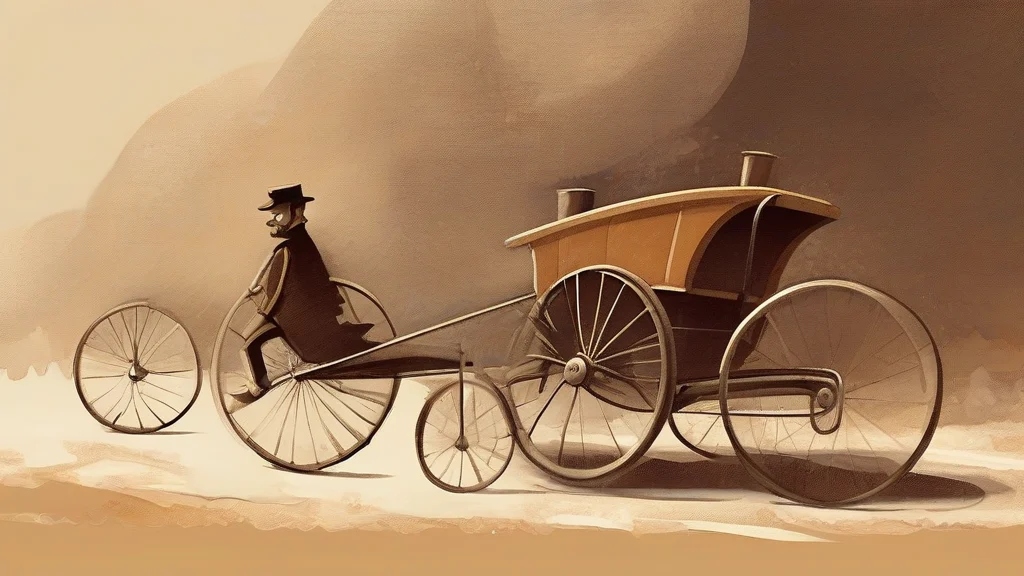
A velocipede is an early pedal-driven bicycle, particularly the lightweight nineteenth-century machine that helped establish the basic form of the modern bicycle. Its name comes from French vélocipède and ultimately from Latin roots meaning “swift” and “foot,” an apt description of a vehicle powered by a rider’s legs. Historically, velocipedes were associated with direct steering, narrow frames, large front wheels, and solid or early pneumatic tires; the penny-farthing belonged to the same broad era but had a very different frame and wheel arrangement. The word is now chiefly used by cycling historians, museums, enthusiasts, and institutions whose names evoke the sport’s early development. In general writing, bicycle or bike is more natural and precise. Velocipede nevertheless remains valuable because it identifies a distinct technological stage in the history of cycling rather than merely serving as an old-fashioned label for any bicycle.
nounAn early pedal-driven bicycle, especially one of the lightweight nineteenth-century type now regarded as a predecessor of the modern bicycle. The term is chiefly historical but remains used in cycling history and in the names of organizations and institutions.
- An early pedal-driven bicycle, particularly a lightweight nineteenth-century velocipede.
- A historical light vehicle propelled by pedals.
"The museum displayed a restored velocipede beside a later safety bicycle."
"The cycling historian traced the development of the velocipede from early wooden frames to safer metal machines."
"She preferred the direct steering and narrow frame of a velocipede to the heavier penny-farthing."
The regular plural is used when referring to multiple velocipedes or examples of the type.
"The collector owns several nineteenth-century velocipedes."
Velocipede literally means “swift-footed,” a fitting name for a machine that turned running feet into a form of transport.
Reviewed by Deb Chak, Editor. AI-assisted content curated by RJS Tech Solutions LLP.
Where does velocipede come from?
The word entered English through French vélocipède, a term formed from Latin velox, meaning “swift,” and pes, meaning “foot.” The underlying expression referred to a vehicle propelled rapidly by the rider’s feet and was applied to early pedal-driven bicycles during the nineteenth century. Its relatives include velocity and velodrome on the “swift” side, while pedestrian and foot derive from the same Latin word for “foot.”
How velocipede is actually used
Velocipede is now chiefly historical or specialist, especially in discussions of nineteenth-century cycling. It should not be used as a generic modern synonym for bicycle when the exact type or period matters.