
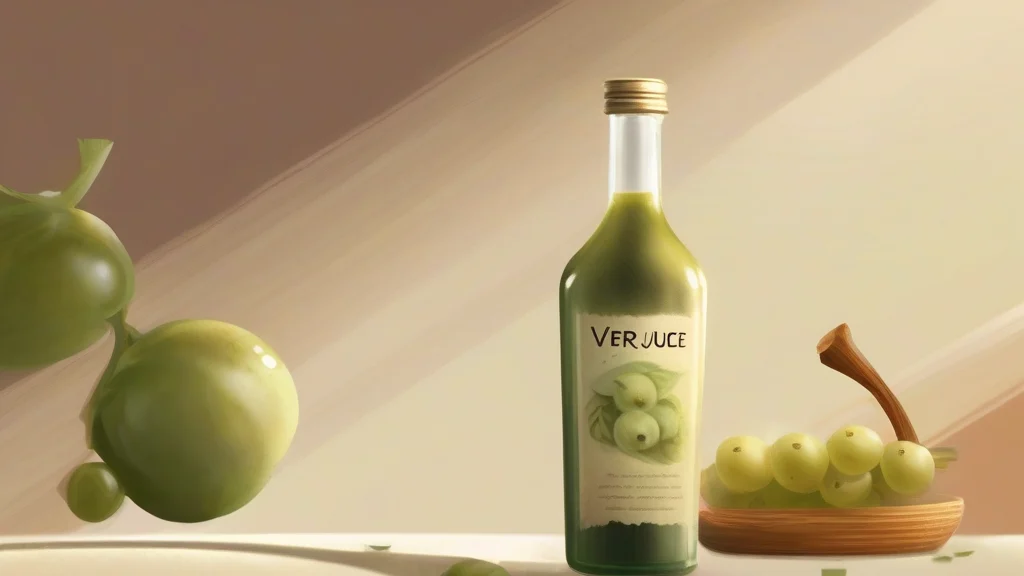
What does verjuice mean?
Verjuice is the acidic liquid obtained from unripe grapes, traditionally used to give food and drink a sharp, distinctive flavour. It is valued in cooking for its acidity, which can balance sweetness, enrich sauces, and sharpen marinades or dressings. Although grape verjuice is the best-known kind, the term can also describe juice made from other unripe or sour fruit, particularly apples. Verjuice has a literary, old-fashioned quality and survives most often in British culinary contexts, historical texts, and discussions of traditional European cooking rather than in ordinary contemporary conversation. Its long history as a souring ingredient explains its association with medieval and early modern recipes, when it was used before or alongside more familiar alternatives such as lemon and vinegar. The word is also memorable for its close association with the unripe fruit of the vine, distinguishing it from ordinary grape juice: verjuice is deliberately associated with tartness, austerity, and concentrated sharpness rather than the sweetness normally expected of fruit.
nounThe acidic juice of unripe grapes, traditionally used in cooking to add sharpness or flavour. By extension, it can refer to a similar sour juice made from unripe apples or other fruit.
- The acidic juice extracted from unripe grapes and used in cooking.
- A sour juice made from unripe apples or other fruit, by extension from the principal sense involving unripe grapes.
"She whisked a spoonful of verjuice into the sauce to sharpen its sweetness."
"The cook added a dash of verjuice to the marinade."
"The historical novel described a merchant selling casks of verjuice made from unripe grapes."
Verjuice is normally uncountable; the plural is used only when distinct quantities, servings, or varieties need to be referred to separately.
"The tasting offered several verjuices made from different varieties of grape."
Verjuice is the sharp, pale juice of unripe grapes—a traditional secret for balancing sweetness without overpowering a dish.
Reviewed by Deb Chak, Editor. AI-assisted content curated by RJS Tech Solutions LLP.
Etymology of verjuice
The word entered Middle English in the form verjus, borrowed from Old French verjus, meaning “green juice.” The French word came through Medieval Latin verjus and is commonly associated with Latin verum, historically connected with green or rhubarb, together with jus, “juice.” The older spelling survives as an alternative form, while the modern word combines the idea of green or unripe fruit with the more transparent element juice.
How verjuice is actually used
Verjuice is chiefly associated with British cooking and historical writing and is uncommon in everyday modern American English. It has a relatively formal or specialist tone and normally refers to an ingredient valued for its acidity rather than for sweetness.
Easily confused with verjuice
Verjus is an older spelling and alternative form of verjuice rather than a different substance.