
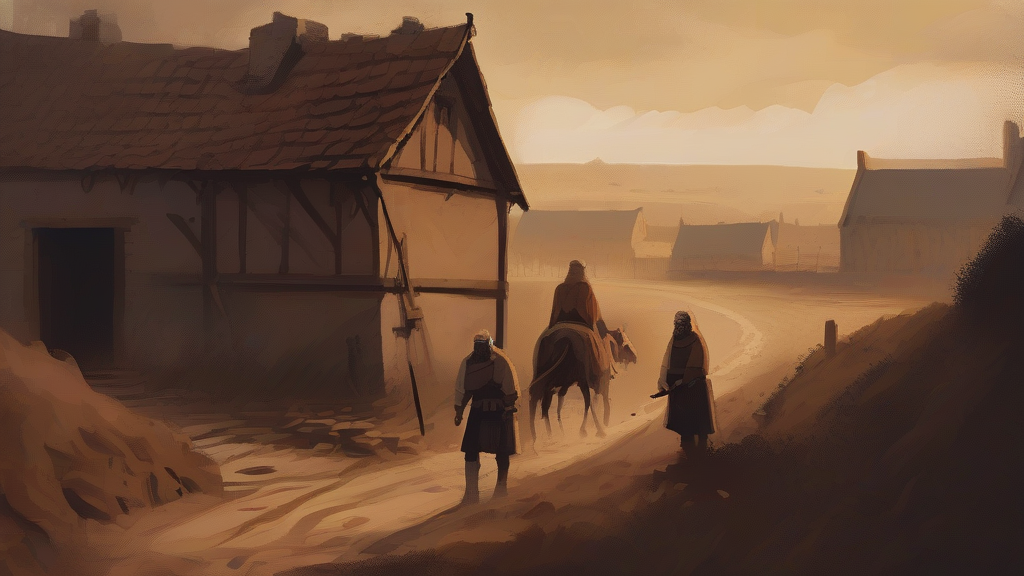
What does villenage mean?
Villenage is a historical legal term for the tenure of land by a villein, a peasant legally bound to the land and owing labor or service to a lord. Its central feature was the tenant's subordinate position: the land and its obligations were held at the lord's will, with specific services and privileges defined by the feudal arrangement. The word can also denote the legal condition of being a villein. In medieval England and other societies influenced by English law, villenage formed part of the broader structure of feudal landholding, alongside obligations that helped organize agriculture and local administration. Today it is rarely used in ordinary conversation, appearing instead in legal histories, works on medieval social history, and historical fiction. Understanding villenage clarifies the distinction between merely owning land and holding it under a personal, hierarchical obligation to a lord. The related forms villeinage and villainage are also encountered in older sources.
nounVillenage is a feudal tenure of land by a villein, usually subject to the lord's will and involving labor or service. By extension, it denotes the legal condition or status of a villein.
- The feudal tenure of land by a villein, typically on terms involving labor or service and subject to the lord's will.
- The legal condition or status of being a villein.
"The charter described the holding as villenage, leaving the tenant's duties at the lord's discretion."
"The charter described the holding as villenage, leaving the tenant's duties at the lord's discretion."
"Historians use villenage to explain how labor and loyalty were bound to the soil in medieval England."
The noun is usually uncountable; the plural is uncommon and is used for separate instances or systems of this tenure.
"The reforms abolished villenages across much of medieval Europe."
Under villenage, a tenant's security could depend on the lord's will.
Reviewed by Deb Chak, Editor. AI-assisted content curated by RJS Tech Solutions LLP.
Etymology of villenage
The word entered Middle English as a legal term derived from Anglo-French villainage, which developed from Old French vilain, meaning a person of low status or a peasant. Its earliest senses concerned the condition or tenure of such a person. The modern English words villein, villain, and villainous were likewise shaped by Old French vilain, although their present meanings have diverged considerably.
Related word forms
How villenage is actually used
A rare, archaic legal and historical term, now encountered chiefly in scholarship, historical texts, and historical fiction. The spellings villeinage and villainage also occur.
Easily confused with villenage
Villainage is a spelling variant of the same historical legal term, not a separate form of tenure.