
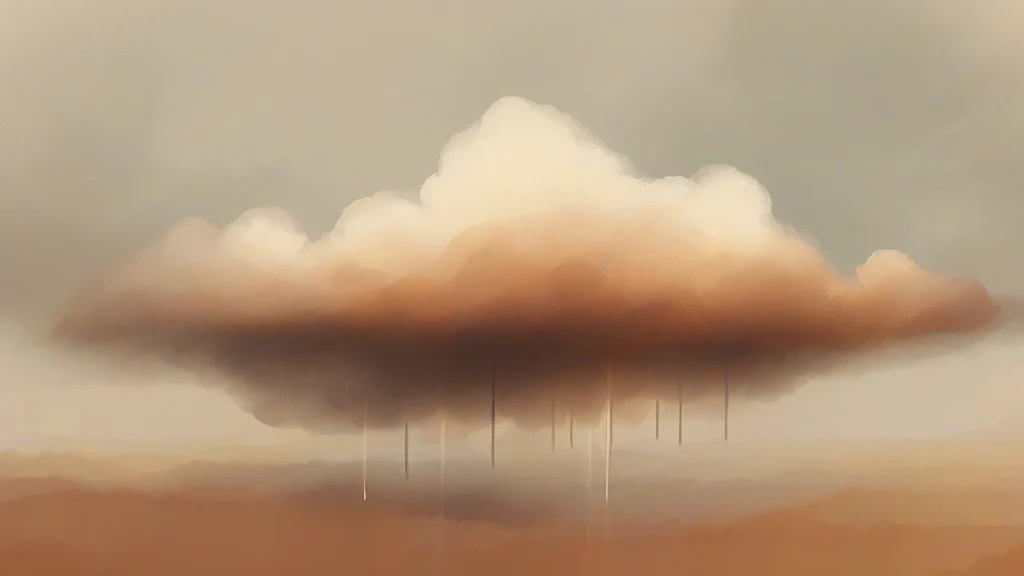
What does virga mean?
Virga is a meteorological term for a narrow shaft or streak of precipitation that falls from a cloud but evaporates before reaching the ground. Because the precipitation remains suspended beneath its cloud, a virga may appear as a hanging curtain, tail, or column and is commonly discussed as virga precipitation, virga rain, or virga snow. The word is uncommon outside technical weather observation, satellite imagery, and cloud studies, but it precisely names an everyday atmospheric effect: rain that appears to fall yet never lands. Virga can form when precipitation encounters sufficiently dry, warm air and evaporates before reaching the surface; falling snow may similarly melt or sublimate. The term comes from Latin virga, meaning “twig” or “rod” and also used for a line or streak. It is especially useful in discussions of cloud structure and precipitation because it distinguishes precipitation that fails to reach the surface from ordinary rain or snow showers.
nounA streak or shaft of precipitation, especially rain or snow, that falls from a cloud but evaporates before reaching the ground.
- A streak or shaft of rain, snow, or other precipitation falling from a cloud but evaporating before reaching the surface.
"A dark virga hung beneath the thunderhead, its rain evaporating long before it reached the fields."
"A dark virga hung beneath the thunderhead, its rain evaporating long before it reached the fields."
"The satellite image revealed a broad virga extending from the storm cloud into the dry air."
The standard plural is used for individual streaks or shafts of precipitation falling from a cloud.
"Several virgae were visible beneath the storm cloud, fading into the dry air."
Some showers are all promise and no arrival: a virga is rain that evaporates before it reaches the ground.
Reviewed by Deb Chak, Editor. AI-assisted content curated by RJS Tech Solutions LLP.
Where does virga come from?
The English meteorological term comes from Latin virga, meaning “twig,” “rod,” or “streak.” The modern sense developed from the word's associations with a narrow, rodlike line, applied to precipitation that descends from a cloud without reaching the surface. The same Latin root lies behind English words including verge, vergette, and virgate; verge and vergette entered English through French, while virgate was formed within Latin.
Related word forms
How virga is actually used
This is a specialized, uncommon word used chiefly in meteorology, cloud studies, and satellite imagery. It is normally lowercase, with virgae as the plural.