
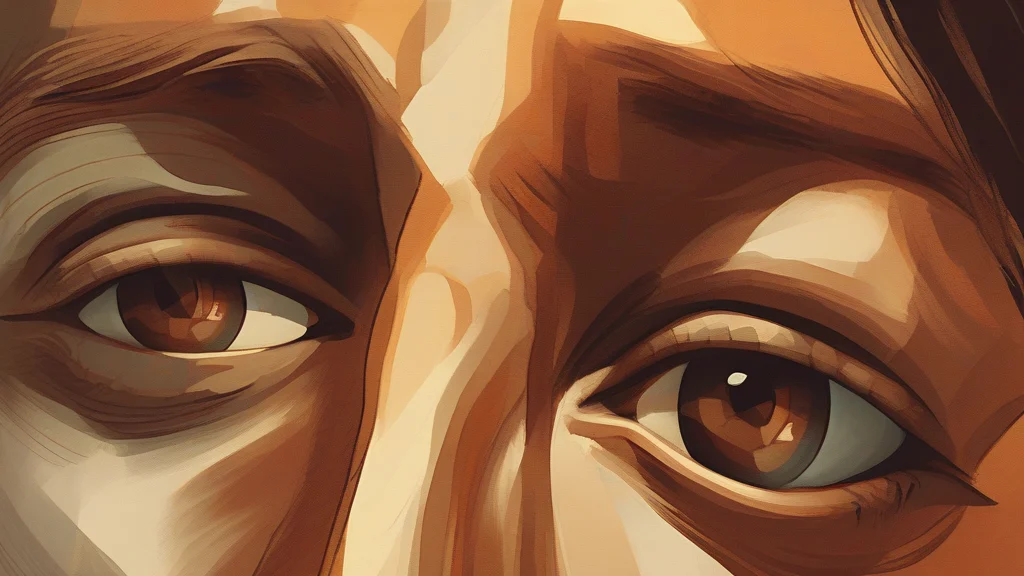
What does visage mean?
Visage means a person's face or outward appearance, with particular attention to the expression conveyed by the features. The word is especially common in formal and literary contexts, where it can sound more evocative or dignified than the everyday word “face.” Writers use it to emphasize a stern, serene, grim, or otherwise memorable appearance, often in descriptions that focus on what a face communicates. By extension, visage may refer to the visible appearance of a place, object, or natural feature, although such usages are usually poetic or deliberately heightened. Although “visage” can sound old-fashioned today, it remains useful in historical, literary, and descriptive writing because it lends a passage greater formality and visual emphasis. It can also refer to the overall appearance of a person rather than merely the physical features of the face. The word ultimately comes through French from a Latin word associated with sight and appearance.
nounThe face or outward appearance of a person, especially as expressed through the eyes and mouth. By extension, it can refer to the visible appearance or aspect of something.
- The face or outward appearance of a person, especially as conveyed by expression.
- The visible form or appearance of something.
"Her serene visage softened the severity of the room."
"His weathered visage bore the marks of a life spent outdoors."
"Through the window, the lake presented a silver visage beneath the moon."
The standard plural is visages; in the plural, the word usually refers to multiple faces or contrasting facial appearances.
"The portraits present the faces of the two brothers as sharply contrasting visages."
Visage is still French for “face”—a linguistic snapshot of English borrowing from French.
Reviewed by Deb Chak, Editor. AI-assisted content curated by RJS Tech Solutions LLP.
Where does visage come from?
Visage entered Middle English from Old French visage, meaning “face” or “appearance.” The French word derives from Latin visus, meaning “appearance” or “face” and also serving as the past participle of videre, “to see.” Related English words, including visible, vision, and visual, continue this Latin association with seeing and appearance.
Related word forms
How visage is actually used
In modern English, visage is primarily literary and somewhat formal. It may sound old-fashioned in ordinary conversation, but remains effective in descriptions of a face, expression, or striking appearance. References to a thing's “visage” are especially poetic.