
What does vitrine mean?
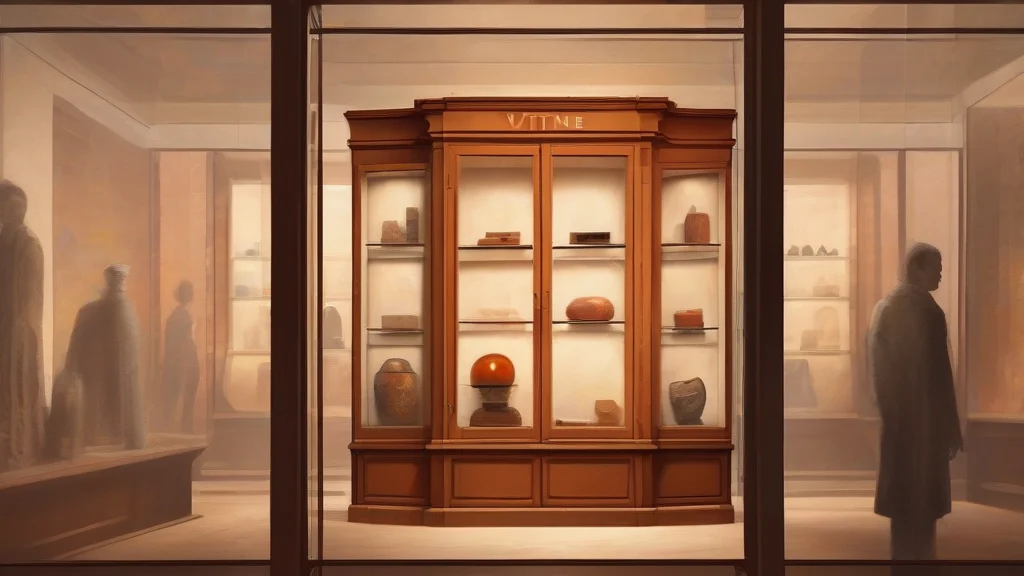
A vitrine is a glass-fronted display case used to present merchandise, artworks, collectibles, or other objects. In British English, it may also refer to a shop window, while in American English the word is particularly common in museums, galleries, jewelry stores, and upscale boutiques. Its associations with glass, careful arrangement, and visual presentation give it a polished, slightly elegant character, although the word is used precisely rather than poetically. A vitrine helps separate the displayed objects from customers or visitors while keeping them visible and protected. It can be lit and designed to direct attention toward a particular item, making it an important part of retail display and museum presentation. Although "display case" is the broader and more neutral expression, "vitrine" is useful when the glass-fronted nature of the display or its sophisticated presentation is especially relevant.
nounA glass-fronted case used to display objects, especially valuable merchandise, artworks, or collectibles. The term can also refer to a shop window or its display.
- A glass-fronted case in which objects are displayed, especially valuable merchandise, artworks, or collectibles.
- A shop window or its display, particularly in an elegant or upscale retail setting.
"The jeweller placed an antique necklace in the center of the illuminated vitrine."
"Museum staff adjusted the lighting around the manuscript in its protective vitrine."
"The boutique's new seasonal arrangement fills the street-facing vitrine."
The plural is regular and is used when referring to multiple display cases or shop windows.
"Several vitrines line the walls of the gallery."
The word puts its history on display: vitrine ultimately traces back to the Latin word for glass.
Reviewed by Deb Chak, Editor. AI-assisted content curated by RJS Tech Solutions LLP.
Where does vitrine come from?
The English word entered from French vitrine, originally meaning a glass or glass-fronted shop window. French vitrine derives from Latin vitrum, meaning "glass," which is also the source of related forms such as vitreous and vitrify. The English term developed into its modern sense of a glass display case or shop display.
How vitrine is actually used
Vitrine is especially associated with shops, galleries, museums, and other settings where objects are presented behind glass. It may sound more refined or design-conscious than the plainer term "display case," but it is not restricted to luxury retail.
Easily confused with vitrine
A window is the opening or glazed part of a building, whereas a vitrine is the display case or window itself used to present objects to the public.