
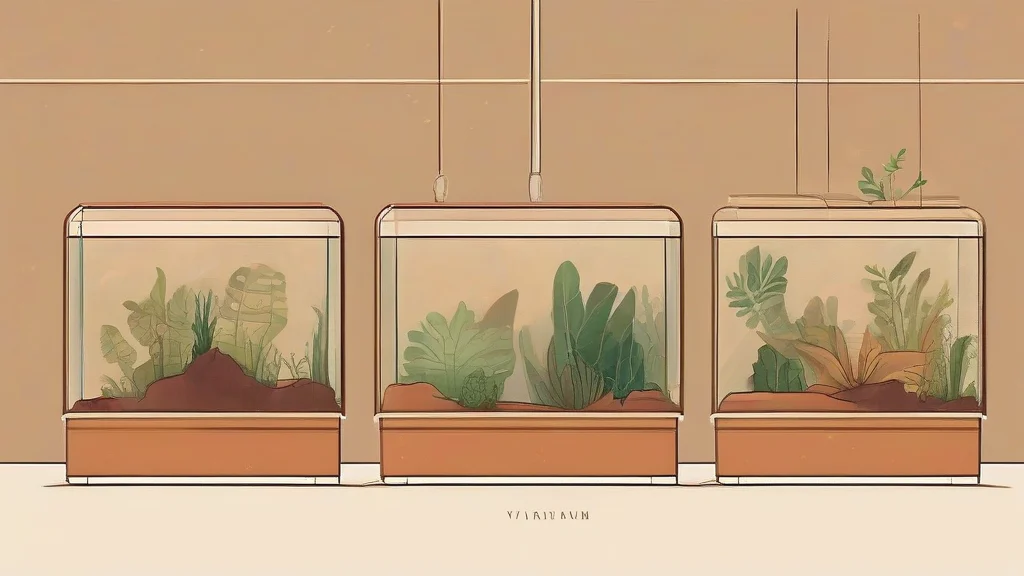
What does vivarium mean?
A vivarium is an enclosed or controlled environment in which living organisms—especially plants, insects, reptiles, and other animals—can be maintained under suitable conditions. The term is used in biology, horticulture, museums, zoos, and vivarium keeping, where it may refer to a small container, a glass-sided growing space, a greenhouse-like structure, or a specialized research facility. Its central meaning is not merely enclosure but controlled life: temperature, humidity, light, ventilation, food, and other conditions may be regulated to support the organisms and make their observation or study possible. A vivarium can also be designed for breeding or public display. The word comes from Latin vivarium, an enclosure for living things, and combines with a longer history of English vocabulary concerned with life and vitality. It is especially useful when precision matters, since it distinguishes a scientifically or deliberately managed habitat for living specimens from an ordinary cage, terrarium, or greenhouse.
nounAn enclosed or otherwise controlled space in which living plants or animals are maintained under suitable conditions, especially for scientific study, observation, or display.
- An enclosed or controlled space in which living plants or animals are maintained, especially for scientific study, observation, breeding, or display.
"The biologist placed each species in a separate vivarium to monitor its growth."
"The botanical garden built a humid vivarium for its tropical plant specimens."
"Moths were kept in a temperature-controlled vivarium before being released in the field."
Both plural forms are standard; vivariums is generally preferred in modern English, while vivaria reflects the Latin formation.
"Two vivariums were maintained at different temperatures to simulate their natural habitats."
A vivarium is a place where life is deliberately kept alive: its name comes from Latin for an enclosure containing living things.
Reviewed by Deb Chak, Editor. AI-assisted content curated by RJS Tech Solutions LLP.
Where does vivarium come from?
The word was borrowed in the late sixteenth century from Neo-Latin vivarium, an enclosure for living animals derived from Latin vīvus, meaning “alive,” and a suffix denoting a place or enclosure. Its original sense developed into the modern scientific meaning for a controlled space in which organisms are kept alive. Wider relatives such as vital, vitamin, vivacious, and viviparous derive from related Latin forms associated with vīta, “life,” ultimately traced to the same Indo-European root for living or being alive.
Related word forms
How vivarium is actually used
This is a specialized term used chiefly in biology, horticulture, museums, zoos, and vivarium keeping. It is broader than a simple cage because it emphasizes the controlled conditions needed to sustain the organisms; the older variant vivary is now comparatively uncommon.
Easily confused with vivarium
A vivarium is designed to maintain living organisms, often animals as well as plants, under controlled conditions, whereas a terrarium is typically a contained growing environment primarily for plants.
Vivary is an established older or alternative form of vivarium rather than a separate kind of enclosure.