
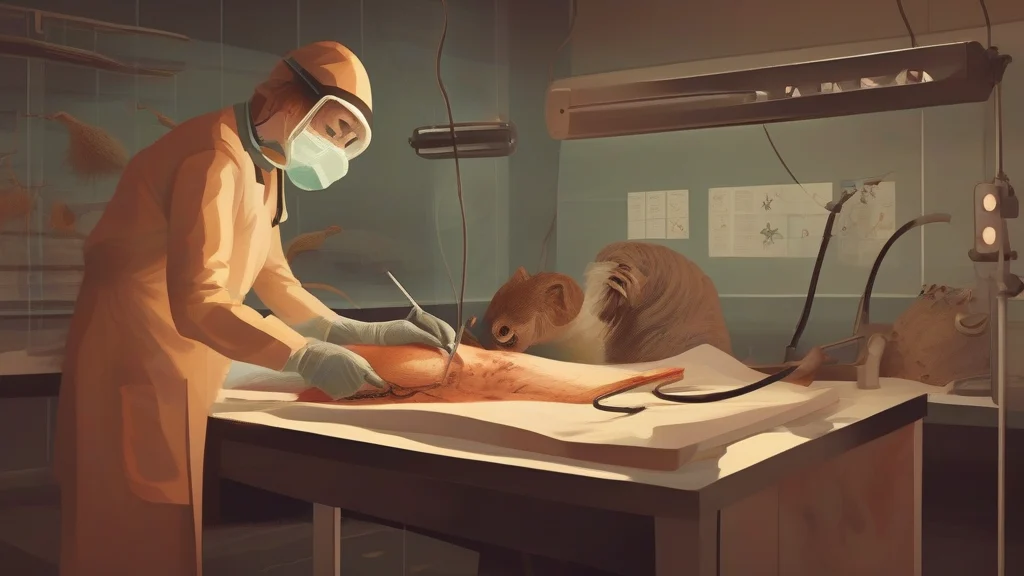
What does vivisection mean?
Vivisection is the dissection of a living animal, historically and medically performed to observe how organs, tissues, and bodily processes function. The term is most often associated with experimental research and with the history of animal experimentation, but it can also be used figuratively for an exacting or invasive examination of a subject. In ordinary use, “vivisection” carries a strong ethical charge because debates about it concern the suffering and scientific value of animals used in research. It is therefore a formal, historically weighted word rather than a neutral synonym for every form of laboratory testing. A more precise account can distinguish the procedure from post-mortem dissection, while “animal experimentation” names the broader field that may include vivisection. The word remains useful in scientific, legal, and ethical contexts because it identifies a specific operation on a living being and carries the history of modern experimental medicine within its meaning.
nounThe dissection of a living animal for scientific observation or experiment. Figuratively, it can mean a minute or invasive analysis of a subject.
- The operation or practice of dissecting a living animal for scientific study.
- A minute, penetrating, or invasive analysis of a subject or system.
"The bill would prohibit vivisection of animals in laboratories."
"The bill would prohibit vivisection of animals in laboratories."
"Her graphic novel uses vivisection as a metaphor for the invasive scrutiny of public life."
Uncommon in general prose; used when referring to separate acts or instances of vivisection.
"His account compares two vivisections performed in different laboratories."
Vivisection literally means “cutting into the living”: Latin vivus (“alive”) meets sectio (“a cutting”).
Reviewed by Deb Chak, Editor. AI-assisted content curated by RJS Tech Solutions LLP.
Where does vivisection come from?
The word dates to the 17th century and was formed from Latin vivus, meaning “alive,” and sectio, meaning “a cutting.” Its constituent elements continue in cognates such as vital, vivid, and viviparous. The literal combination preserves the defining feature of the procedure: cutting into an organism that is still alive.
Related word forms
How vivisection is actually used
The word is formal and historically associated with debates over the ethics of experimenting on animals. It often carries a strongly critical or morally charged connotation, although some advocates use it neutrally when discussing scientific practice. The broader term “animal experimentation” covers procedures that may not involve dissection.
Easily confused with vivisection
Dissection may involve either a living organism or a dead one, whereas vivisection specifically means dissection of a living animal.