
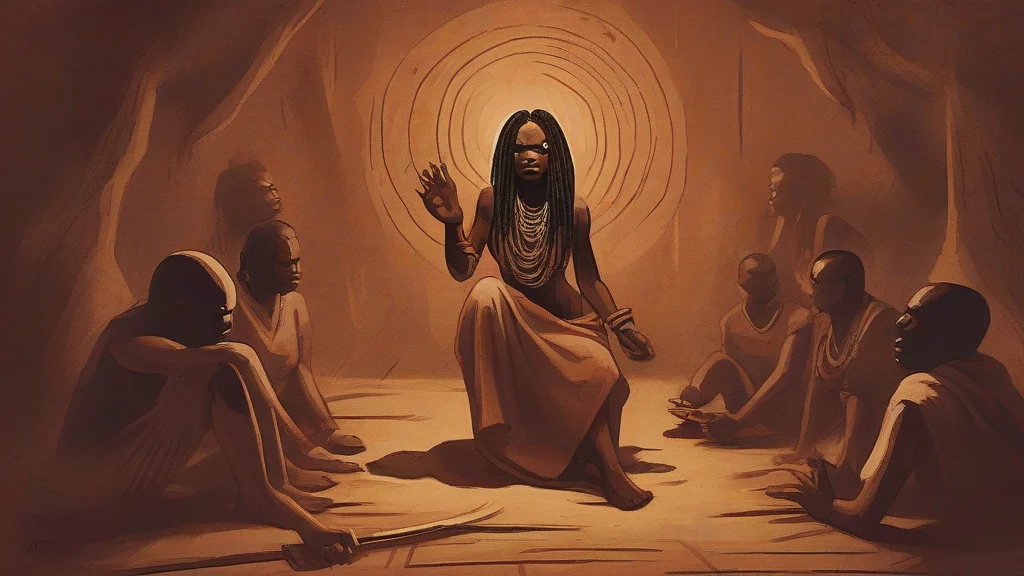
What does vodun mean?
Vodun is an English noun used for a spirit or deity in the religious traditions of the Fon peoples of West Africa, especially in Benin and Togo. It can also refer collectively to the wider religious tradition, most familiarly in its Haitian and diasporic form, Haitian Vodou. In this sense, vodun means a living system of ritual, ancestry, community, and relationships between people and powerful spiritual beings, not a synonym for generic magic. Historical accounts and anthropological studies often discuss the particular duties, offerings, and narratives associated with named voduns, while popular descriptions may flatten varied African traditions into a single sensational image. Because the word can denote either an individual being or the religion more broadly, context determines its sense. It is especially useful in writing about West African religious history, the Atlantic world, and the survival and transformation of African religious practices in the Caribbean.
nounA spirit or deity within the religious traditions of the Fon peoples of West Africa. By extension, the term also denotes the broader African and diasporic religious tradition in which such beings are approached through ritual.
- A spirit or deity in Fon and related West African religious traditions.
- The broader religion or spiritual tradition centered on such beings, especially in Haiti and the African diaspora.
"During the ceremony, the community called upon the vodun for protection and guidance."
"During the ceremony, the family asked the vodun for protection before planting."
"Scholars study Vodun as a living African and diasporic religion rather than merely a collection of supernatural beliefs."
The plural is used for multiple named spirits or deities but is uncommon; the religious tradition itself is normally treated as uncountable.
"The oral histories describe voduns associated with rivers, ancestors, and particular communities."
Vodun is not simply a synonym for generic black magic: it names a rich religious world in which named spirits and deities can be approached through ritual.
Reviewed by Deb Chak, Editor. AI-assisted content curated by RJS Tech Solutions LLP.
Etymology of vodun
The English word is borrowed from Fon vodu, meaning “spirit” or “deity,” in traditions associated especially with the Fon peoples of present-day Benin and Togo. English forms include vodoun and, in the Haitian context, Vodou; the related form voodoo came through Louisiana French and English from the same Fon source. Across these forms, the word developed from a term for spiritual beings to broader labels for the religious practices in which those beings are central.
How vodun is actually used
The word can refer either to an individual spiritual being or, collectively, to the religious tradition. In English, the collective sense is often capitalized, while capitalization is otherwise inconsistent. The Haitian form is commonly written Vodou in Haitian Creole and specialized scholarship.
Easily confused with vodun
Vodun specifically names spirits and deities and the West African-derived traditions centered on them, whereas voodoo is a related term especially associated with Louisiana and New Orleans religious practices.