What does wadi mean?
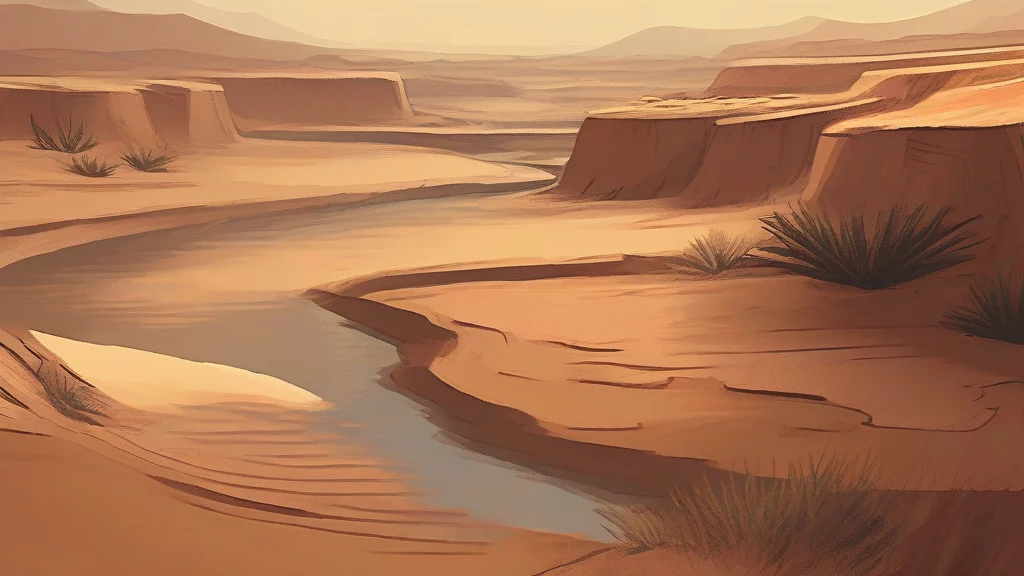
A wadi is a dry riverbed or valley found in desert or semi-arid regions, often with a seasonal stream. It is a common geographical feature in the Middle East and North Africa. Wadis are formed by the flow of water during periods of heavy rainfall or flash flooding, and can be dry for long periods of time. The term 'wadi' is used to describe both the physical feature and the seasonal stream or river that flows through it. Understanding wadis is important for travelers, hikers, and anyone interested in the geography and ecology of arid regions.
nounA wadi is a dry riverbed or a valley in a desert or semi-arid region, often with a seasonal stream. It is typically found in the Middle East and North Africa.
- A dry riverbed or valley in a desert or semi-arid region.
- A seasonal stream or river in a wadi.
"The hikers followed the wadi through the desert, searching for a place to rest."
"The tourists got lost in the wadi while trying to find their way back to camp."
"The wadi was filled with water during the rainy season, but was dry during the summer months."
The plural form 'wadis' is used to refer to multiple dry riverbeds or valleys.
"The tourists visited several wadis during their trip to the desert."
Reviewed by Deb Chak, Editor. AI-assisted content curated by RJS Tech Solutions LLP.
Etymology of wadi
The word 'wadi' comes from the Arabic language, in which it is written as 'وادي'. It has been adopted into many languages, including English, and is used to describe a specific type of geographical feature found in desert and semi-arid regions. The term has been used in English since the 19th century, and is widely recognized in the context of Middle Eastern and North African geography.
How wadi is actually used
The term 'wadi' is often used in the context of desert or semi-arid regions, particularly in the Middle East and North Africa. It can also refer to a seasonal stream or river that flows through a wadi.