
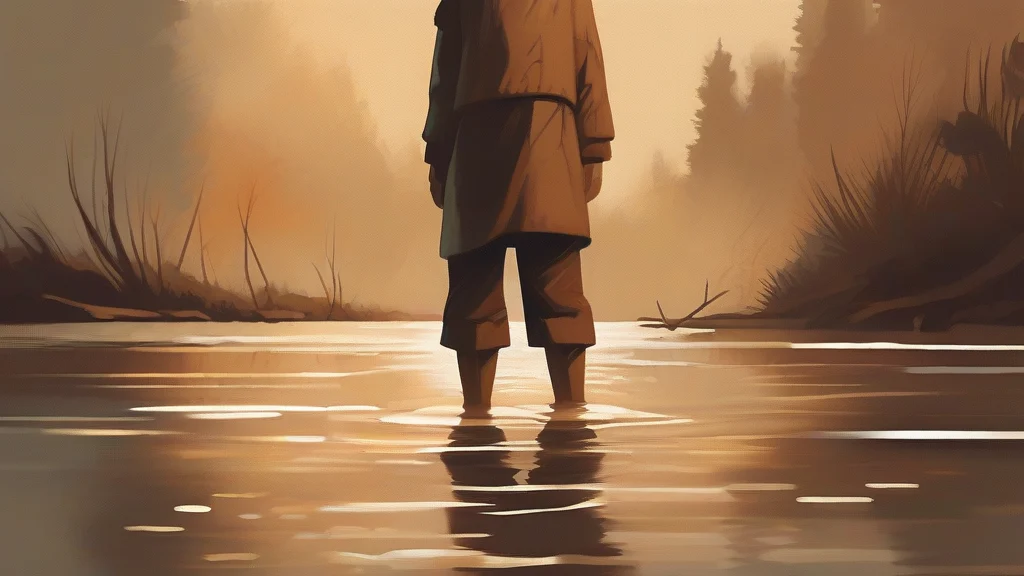
What does wading mean?
Wading means walking through shallow water or another medium that covers the feet or lower legs. The word is particularly associated with streams, lakeshores, marshes, and muddy ground, and it conveys the physical sensation of moving slowly through a medium that resists each step. Wading also has a well-established figurative use for tackling a difficult, lengthy, or complicated task. In this sense, it often suggests that progress is slow and demanding rather than impossible. The form is common in both British and American English and works naturally in descriptions of literal activity as well as figurative efforts. Related terms such as wader are derived from the same verb, while “wading” and “wadding,” despite their similar appearance, have quite different meanings. Wading is useful because it captures both physical movement through water and the patient, laborious process of working through an obstacle.
verbTo walk through shallow water or another liquid or soft material that covers the feet or lower legs. By extension, it means to proceed slowly or laboriously through a difficult situation.
- To walk through shallow water or another medium that covers the feet or lower legs.
- To proceed slowly, laboriously, or with difficulty through a difficult situation or body of material.
"They waded across the shallow stream as the sun began to set."
"The children waded through the ankle-deep water near the shore."
"The committee spent months wading through the complicated proposals."
A wader gets its name from the same verb: long legs, patient steps, and a preference for shallow water.
Reviewed by Deb Chak, Editor. AI-assisted content curated by RJS Tech Solutions LLP.
Where does wading come from?
The English verb comes through Middle English waden from Old English wadan, with senses involving movement and going through water. It descends from Proto-Germanic *wadaną and a Proto-Indo-European root *wad- meaning “to go”; Dutch waden, German waten, and Old Norse vaða are cognates.
Related word forms
How wading is actually used
The form is neutral in register and is especially natural as a present participle. It can also modify a noun, as in “wading birds,” indicating birds that walk through shallow water in search of food.
Easily confused with wading
Wading means moving through water, whereas wadding is soft material used for stuffing or padding.