
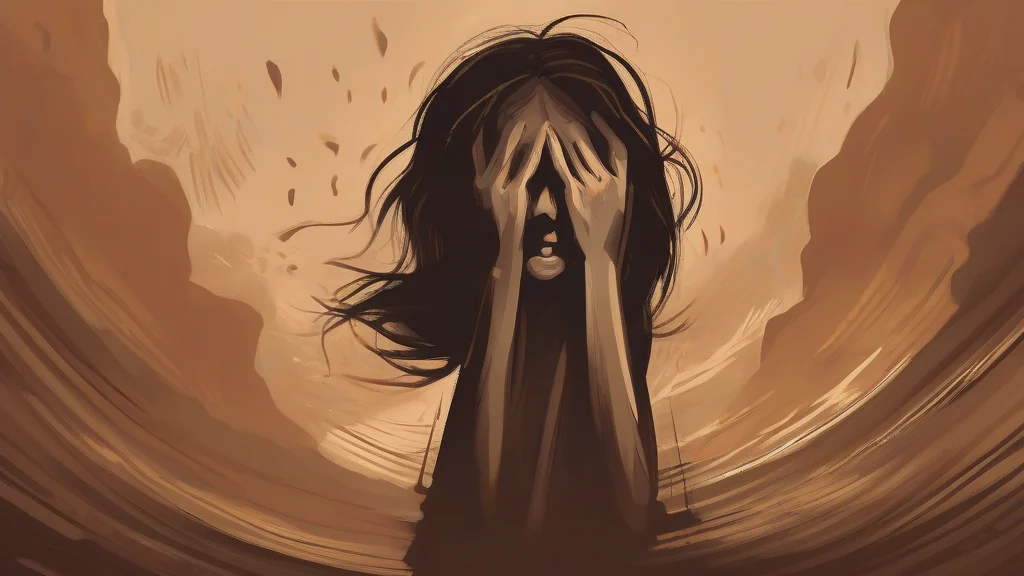
What does wailing mean?
Wailing means crying loudly and continuously, usually because of grief, fear, pain, or despair. The word often suggests an intense, unrestrained sound that continues beyond a brief cry, though it can also describe prolonged noises such as a wailing siren or wind. As a participle, wailing is widely used before nouns, as in a wailing child or a wailing sound. It can function as a noun for the act or sound of crying loudly, most often as an uncountable noun. Wailing is related to wail, an old English word for lamenting or crying out, and the modern form developed through the addition of the suffix -ing. Compared with crying, wailing is generally more emphatic and emotionally charged; compared with weeping, it often implies greater force or loudness. In literary and poetic contexts, the word can also evoke a mournful, keening quality.
To cry loudly and continuously, especially in grief, pain, or distress; to produce a sustained mournful or plaintive sound.
"The mourners wailed outside the church as the procession began."
The verb often describes an emotionally intense cry and can also apply to sustained mechanical or natural sounds, such as a wailing siren.
Characterized by loud, prolonged crying or by a sustained, mournful or high-pitched sound.
"A wailing child greeted her parents at the door."
This participial use is common before nouns, especially child, sound, siren, and cry.
The act of crying loudly or continuously, or a sustained sound of grief or distress.
"The wailing of the baby woke the household."
Usually uncountable; the plural form wailings is uncommon.
Usually uncountable; the plural form is rare.
"The wailings echoed through the empty hall."
Reviewed by Deb Chak, Editor. AI-assisted content curated by RJS Tech Solutions LLP.
Where does wailing come from?
Wailing is the gerund and present participle of wail, formed in English by adding -ing to the older verb. Wail descends from Old English wǣlan, meaning to cry out, lament, or wail. Its history belongs to an English and wider Germanic vocabulary associated with loud lamentation, rather than to a modern borrowing. Related forms include wailer and the poetic adjective wailful.
Related word forms
How wailing is actually used
Wailing is emotional and usually describes a person's cries or a sustained mournful sound. It can sound vivid and somewhat literary, while everyday speakers may prefer crying or screaming in less formal contexts.
Easily confused with wailing
Wailing means crying loudly or producing a mournful sound, whereas whaling refers to hunting whales or working in the whale-hunting industry.