
What does wamble mean?
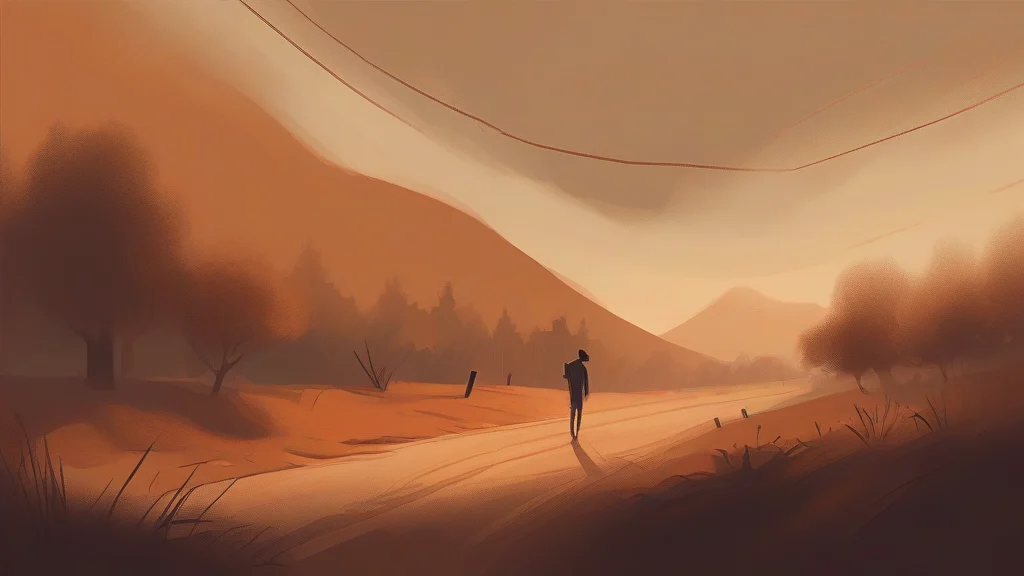
Wamble means to move with an unsteady, staggering gait, as if one might lose balance at any moment. It can describe a person shuffling or lurching, an animal moving awkwardly, or a vehicle rocking from side to side. The verb may also describe a process or course of action proceeding irregularly, without steady direction or momentum. “Wamble” sounds old-fashioned and is now uncommon in ordinary speech, but it remains vivid in British and American English, especially in descriptive or literary writing. Its unusual history adds to its interest: the word comes through Middle English from Old English wamba, meaning “belly,” and originally conveyed the idea of turning or rolling about. That bodily association fits the modern meaning particularly well. Compared with “wander,” which stresses the lack of a definite route or purpose, “wamble” emphasizes an awkward, unstable manner of movement. Knowing the word gives writers a compact, expressive alternative to “stagger,” “lurch,” or “wobble.”
To move with an unsteady, staggering or shuffling gait; to wobble or lurch. In figurative use, to proceed in an irregular or wandering fashion.
"The old horse wambled across the muddy field."
Now uncommon in neutral modern English and often perceived as literary, humorous, or archaic.
An unsteady, staggering gait or movement.
"He crossed the uneven ground with a weary wamble."
A rare noun, chiefly found in older or deliberately archaic writing.
The regular plural is wambles, although the noun itself is rare.
"After a few awkward wambles, he found his balance and continued walking."
Wamble traces back to Old English wamba, “belly”—a reminder that an unsteady roll of the body can be a matter of etymology.
Reviewed by Deb Chak, Editor. AI-assisted content curated by RJS Tech Solutions LLP.
Etymology of wamble
Wamble comes from Middle English wamblen, meaning “to turn or roll about,” derived from Old English wamba, “belly,” with the verbal suffix -le. Its modern sense of moving unsteadily developed from the earlier idea of writhing or tumbling about. The word is related to womb and wamb, while German wammeln preserves a cognate sense of turning or tumbling.
Related word forms
How wamble is actually used
The verb is now rare and chiefly literary, humorous, or archaic. It often sounds deliberately old-fashioned in modern use. The noun is even less common.
Easily confused with wamble
Wander means to move without a definite course or purpose, whereas wamble emphasizes an awkward, unsteady gait.