
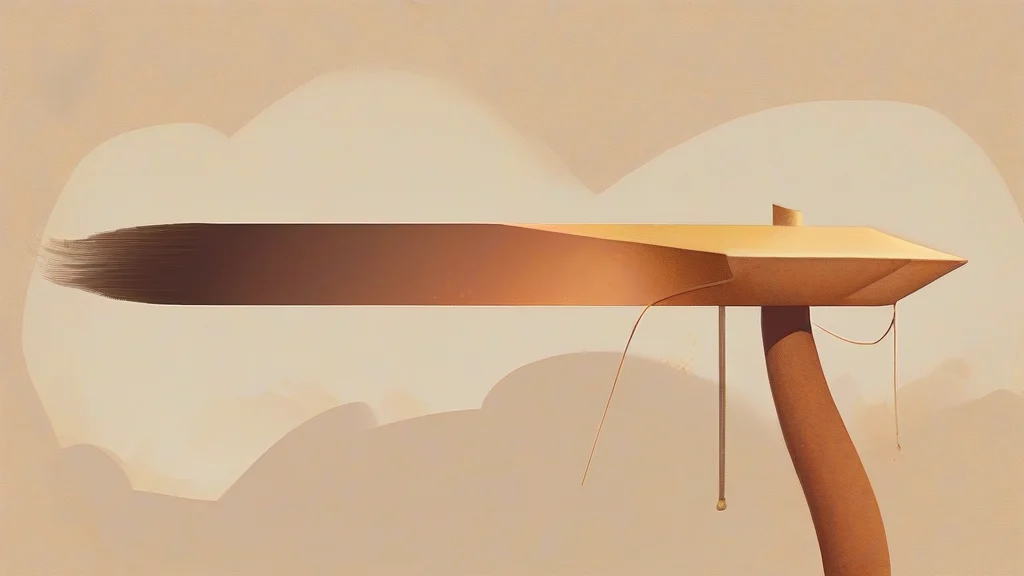
What does wandlike mean?
Wandlike is an uncommon English adjective meaning “like a wand,” especially in the sense of being long, narrow, and rod-shaped. Its clearest use is visual: a character may be described as having a wandlike staff, while an artist or writer may note a wandlike figure, stroke, or line. The word is more specific than generic terms such as thin or elongated because it evokes the proportions and silhouette of a wand. Although wands are strongly associated with magic, that association is contextual rather than part of the formal definition. In technical or descriptive writing, wandlike can neutrally characterize an object’s form; in imaginative prose, it may add a playful or mysterious note. Though rarely necessary in everyday conversation, it is useful when the shape of an object matters and a more familiar expression such as sticklike or rod-shaped would be less distinctive.
adjectiveResembling a wand in shape or appearance, especially in being long, narrow, and rod-like.
- Resembling a wand in shape or appearance.
"The magician held a slender, wandlike staff upright."
"The magician raised a slender, wandlike staff."
"She drew a long, wandlike line across the page."
Wandlike turns a simple shape into a picture: a narrow rod that may be ordinary—or quietly magical.
Reviewed by Deb Chak, Editor. AI-assisted content curated by RJS Tech Solutions LLP.
Etymology of wandlike
Wandlike is a transparent English formation built on wand and the suffix -like. Wand continues Old English w and, “stick,” while words such as wander belong to the same broader Germanic word family, although their modern meanings have diverged. The compound adjective wandlike developed within English to describe an object resembling a wand.
How wandlike is actually used
Uncommon and chiefly literary, poetic, or descriptive. It can carry a whimsical association in imaginative contexts, but its literal meaning concerns shape rather than magic.