
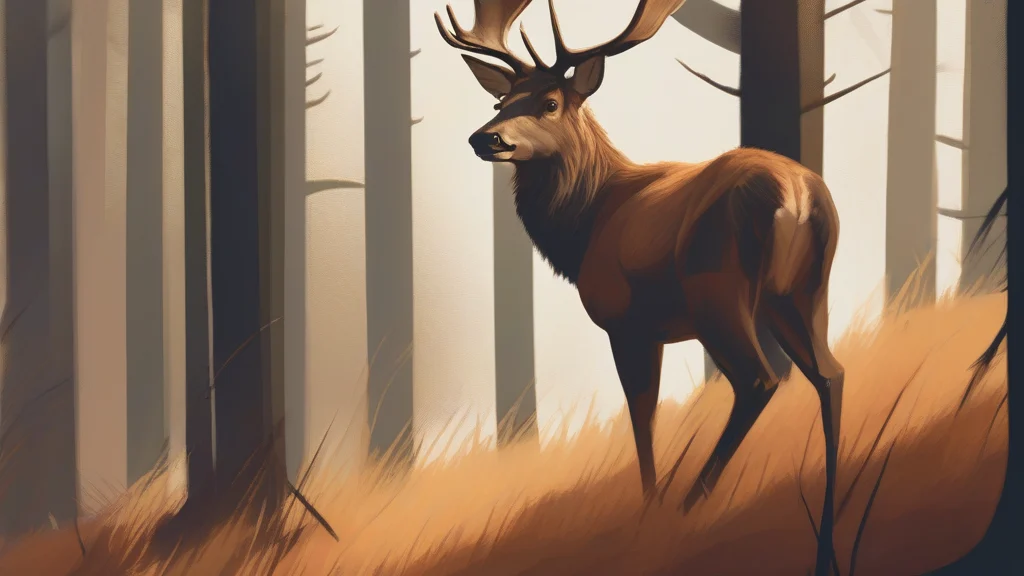
What does wapiti mean?
The wapiti is the North American elk, a large deer of the species Cervus canadensis. It is native to Canada and the United States, where it inhabits forests and open woodland and is especially associated with the Rocky Mountains and northern forests. In everyday North American English, “elk” is the more familiar name; wapiti is used more formally in zoology, wildlife management, hunting, and place names, and it avoids the ambiguity arising from British and North American naming traditions. The word has a distinctive history: it entered English from Canadian French, which borrowed it from an Algonquian language, generally identified as Cree. In the word's principal sense, it refers to the species rather than only to an individual animal, although ordinary usage readily applies it to a single deer. A wapiti can therefore mean either the animal itself or, collectively, the species, as in references to a healthy wapiti population. The term is uncommon enough to sound distinctive, but it remains precise and is particularly valuable when the broader label “elk” could be misunderstood.
nounA wapiti is a large North American deer of the species Cervus canadensis, traditionally distinguished from the closely related red deer of Eurasia.
- The North American elk, Cervus canadensis, a large deer native to Canada and the United States.
"A mature wapiti stood at the edge of the meadow, its broad antlers silhouetted against the morning sky."
"The reserve supports one of the largest remaining wapiti populations in North America."
"A wapiti bull can weigh far more than a mule deer and carry an imposing rack of antlers."
The standard plural adds the suffix -s; in wildlife-management contexts, the unmodified singular may also be used collectively.
"A small herd of wapitis moved through the valley after the first snowfall."
The wapiti is North America's “elk”—unless you're using British English, where elk means moose.
Reviewed by Deb Chak, Editor. AI-assisted content curated by RJS Tech Solutions LLP.
Etymology of wapiti
Wapiti entered English through Canadian French in the early nineteenth century. The French word came from an Algonquian term, usually identified as Cree wapiti, referring to the large deer now known by that scientific name. The borrowing produced no common English derivatives, and the word's relatives in everyday English vocabulary are consequently limited.
How wapiti is actually used
The term is chiefly North American and generally more formal or technical than the everyday term “elk.” It is especially common in zoology, wildlife management, hunting, and place names.
Easily confused with wapiti
In North American English, elk usually means the wapiti, whereas in British English, elk ordinarily means the moose.