
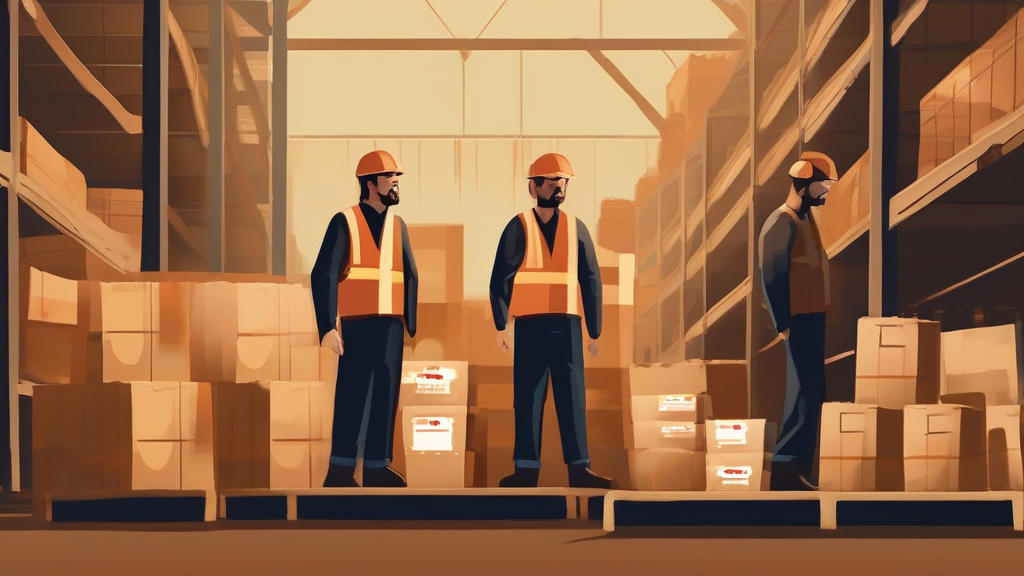
What does warehousemen mean?
Warehousemen is the plural of warehouseman, meaning workers employed in a warehouse. Such workers receive, check, organize, store, move, and dispatch goods in facilities used for storage or distribution. The word is an occupational term with a long practical history in trade and transport, and its modern use can include employees at receiving docks, distribution centers, and bonded stores. Although “warehousemen” ends in “-men,” its use does not necessarily exclude women; the form reflects the conventional masculine plural pattern inherited when such job names were formed. In contemporary writing, “warehouse workers” is often more inclusive and immediately transparent, while “warehousemen” can sound traditional, formal, or historical. It remains useful when discussing labor, shipping, logistics, or the organization of physical goods, and it preserves a visible trace of the vocabulary of warehouse employment.
nounWarehousemen are workers employed in a warehouse, where goods are received, organized, stored, and prepared for distribution or dispatch. The term is the irregular plural of warehouseman.
- Workers employed in a warehouse to receive, organize, store, move, or dispatch goods.
"The warehousemen carefully inventoried the newly delivered crates."
"The warehousemen worked through the shipment and recorded every item on the inventory list."
"Local newspapers reported that the warehousemen had entered into a prolonged dispute over wages and working conditions."
The standard plural of warehouseman, changing “-man” to “-men,” as in watchmen and workmen.
"The warehousemen loaded the final truck before the shift ended."
The plural keeps the traditional “-men,” turning warehouseman into the same-style plural seen in watchmen and workmen.
Reviewed by Deb Chak, Editor. AI-assisted content curated by RJS Tech Solutions LLP.
Etymology of warehousemen
Warehousemen is the irregular plural of warehouseman, formed by combining warehouse with man, a common pattern for occupational labels. Warehouse entered Middle English through Anglo-French from Medieval Latin and ultimately derives from Arabic warāsh, a place for keeping or storing goods; related English forms include warehousing, warehoused, and warehouses.
Related word forms
How warehousemen is actually used
This is a formal occupational term. Although its ending reflects a traditionally masculine occupational label, modern speakers may also use it for warehouse workers of any gender; “warehouse workers” is often preferred when inclusiveness is important. The form can sound traditional or historical in contemporary writing.
Easily confused with warehousemen
“Warehouse man” is a less standardized two-word spelling of the singular occupational term, while “warehousemen” is the conventional plural form.