
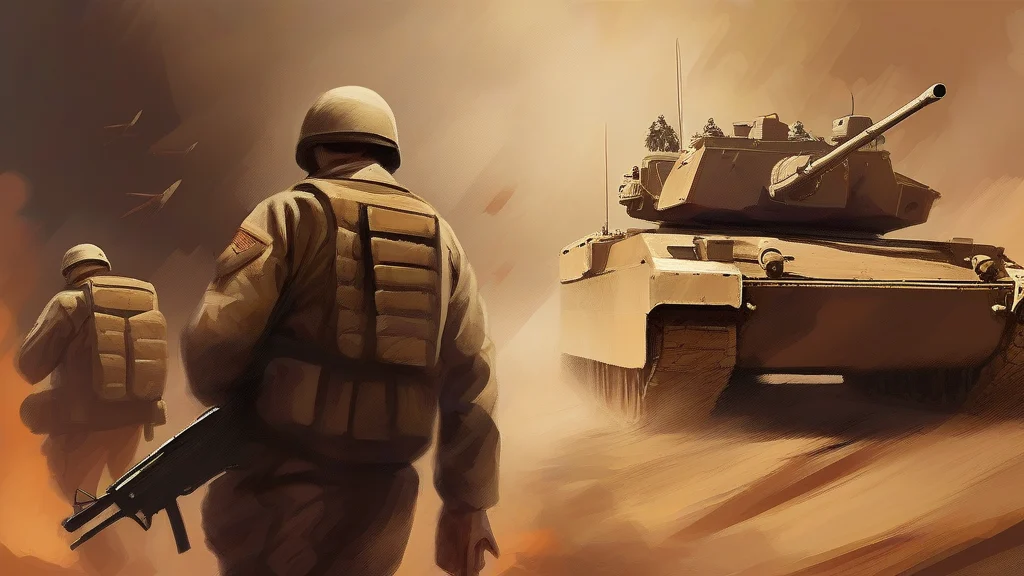
What does warfare mean?
Warfare means the activity and methods of fighting war. It is used when speakers want to emphasize organized conflict, military strategy, or the distinctive practices associated with a type of combat. In phrases such as conventional warfare, cyber warfare, and chemical warfare, it identifies a particular mode of fighting. The word also carries strong connotations of violence, destruction, danger, and the human cost of armed conflict, although academic discussion often uses it in a more analytical and formal register. Warfare is broader than the word battle, which usually denotes an individual engagement, and broader than combat in the sense of fighting generally. The term is especially useful for discussing how warfare changes through technology, politics, geography, and social organization. Its enduring relevance is evident in the continued evolution of conventional, asymmetric, informational, and cyber conflict.
nounWarfare is the activity, methods, or practice of fighting war. It may refer to armed conflict as a whole or to a particular form of military combat, such as cyber or guerrilla warfare.
- The activity or practice of fighting wars.
- The methods, tactics, and strategic principles used in military conflict.
- A particular form or domain of armed conflict, as in cyber warfare or chemical warfare.
"Advances in technology have transformed warfare, making battles increasingly dependent on remote systems and electronic intelligence."
"The treaty ended the war, but the physical and psychological effects of warfare continued for generations."
"Government officials described the cyber warfare as a serious threat to critical infrastructure."
Rare. Warfare is normally used as an uncountable noun, especially when referring to the practice or methods of fighting war.
"The historians compared the two warfares by examining their differing military strategies."
From cyber attacks to drone strikes, warfare now reaches far beyond the traditional battlefield.
Reviewed by Deb Chak, Editor. AI-assisted content curated by RJS Tech Solutions LLP.
Where does warfare come from?
The word dates from late Middle English and was formed by combining war with -fare, an element associated with a journey, passage, or military expedition. The first element descends from Old English wēr, while the second is related to Old English fær, meaning a journey or passage. Its development reflects the long-standing idea of warfare as both conflict and the organized conduct of military expeditions.
How warfare is actually used
Warfare is a formal, generally uncountable noun. It often denotes a mode, method, or condition of conflict rather than a single engagement.
Easily confused with warfare
Warfare emphasizes the methods and practice of armed conflict, whereas war can refer to a particular conflict or to the institution and condition of organized hostility.