
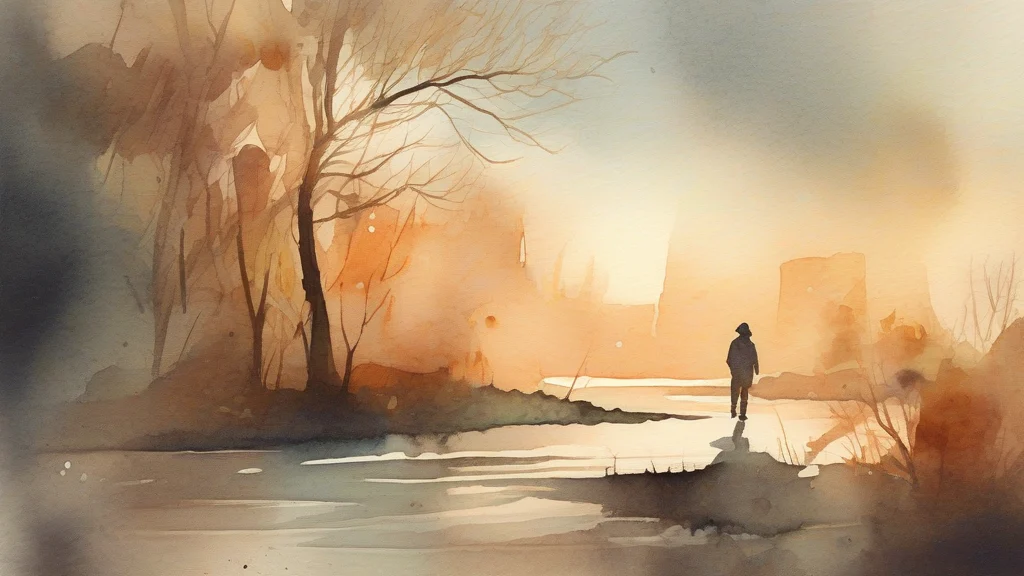
What does watercolor mean?
Watercolor names both a transparent painting medium and an artwork made with it. Pigments are mixed with water, usually with a binder that helps them adhere to the paper, and the resulting washes can range from delicate, luminous tints to richly layered passages of color. Because the medium is transparent, the paper often functions as the brightest part of the image, particularly in landscapes, botanical studies, and architectural sketches. The word is also used informally for any watercolor painting, often with a modifier such as landscape or botanical. In American English, watercolor is the standard spelling, while watercolour is common in British English. The term can describe the materials used by an artist, the finished artwork, or the activity of painting with water-based pigments. Although watercolor is sometimes confused with gouache, the principal difference is transparency: watercolor allows the support beneath the pigment to remain visible, while gouache is typically opaque.
A transparent painting medium made from pigment mixed with water, or a painting made with this medium.
"The artist worked in watercolor, letting the paper remain visible beneath the washes."
The sense referring to the medium and the sense referring to a finished painting are both common.
Relating to watercolor or made with watercolor.
"She laid a sheet of watercolor paper on the table."
This use is especially common in art and publishing contexts.
To paint with watercolor.
"They watercolored the mountains in loose, transparent layers."
The verb is relatively uncommon outside descriptions of artistic practice.
The plural can refer to individual paintings, sets of pigments, or supplies associated with the medium.
"Her watercolors depict coastal villages in vivid, luminous color."
Watercolor lets the white of the paper do the work of light, so a single wash can suggest mist, sky, or distant mountains.
Reviewed by Deb Chak, Editor. AI-assisted content curated by RJS Tech Solutions LLP.
Etymology of watercolor
Watercolor is an English compound formed from water and color. Water comes from Old English wæter, while color entered Middle English from Old French and ultimately from Latin color, referring to pigment or appearance. The compound developed as artists began distinguishing their water-based medium from opaque painting methods; watercolour remains the traditional British spelling, whereas watercolor is standard in American English.
Related word forms
How watercolor is actually used
In American English, watercolor is the usual spelling; watercolour is the traditional British spelling. As a verb, watercolor is comparatively rare and is more natural in art-related contexts than in general conversation.
Easily confused with watercolor
Both are water-based painting media, but watercolor is generally transparent, whereas gouache is made opaque with additional pigment.