
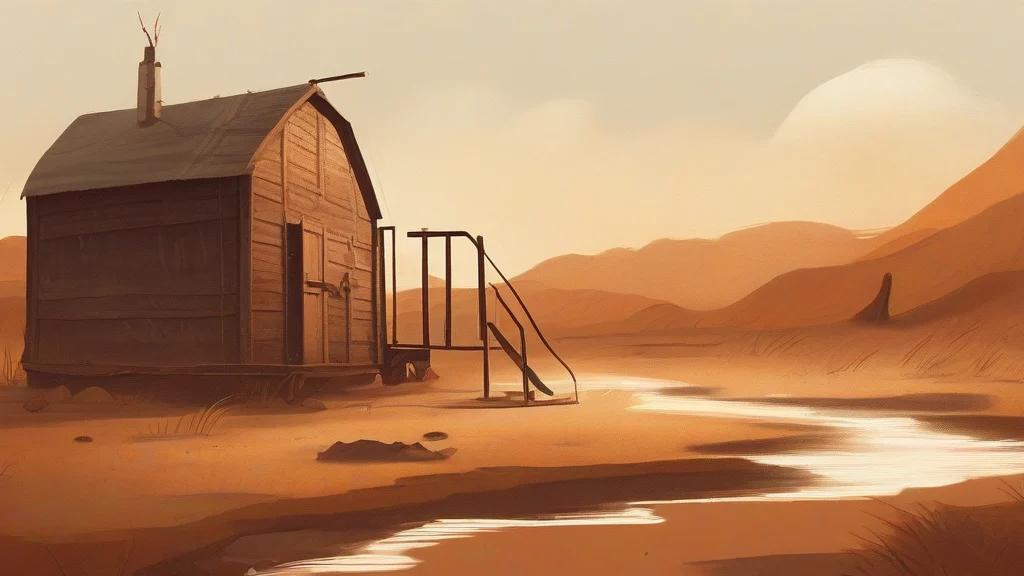
What does waterless mean?
Waterless is an adjective meaning without water or without access to a water supply. In literal use, it can describe deserts, landscapes, journeys, wells, seasons, or communities where water is absent, scarce, or unavailable. The word is especially associated with travel, survival, drought, and environmental description: a waterless journey offers no opportunity to replenish a supply, while a waterless season may be defined by a prolonged failure of rain or meltwater. Its figurative uses extend the basic idea to any situation lacking an essential resource, such as time, funding, or opportunity. Waterless is not simply a more poetic synonym for “dry.” “Dry” is a broader term for the absence of moisture, while “waterless” specifically points to the lack of water itself or the lack of a practical means of obtaining it. The word is used in both British and American English and can range from plain descriptive language to a more emphatic or evocative style.
adjectiveLacking water or having no available supply of water. It may describe a place, period, route, or situation in which water is absent or unobtainable.
- Lacking water or having no available supply of water.
- Of a period or environment: without adequate water, rainfall, or moisture.
"The expedition crossed a waterless stretch of desert and carried only a small reserve of drinking water."
"The old well was a waterless landmark for travellers in the arid plain."
"The report describes a waterless summer followed by severe flooding."
A waterless route is not merely a dry one: it offers no place to fill a bottle.
Reviewed by Deb Chak, Editor. AI-assisted content curated by RJS Tech Solutions LLP.
Where does waterless come from?
The word is an English compound formed by joining water with the suffix -less, a productive way of expressing “without” or “lacking.” Water descends from Old English wæter, ultimately from Proto-Germanic *watōr, while the suffix comes through Old English lēas, meaning “without” or “free from.” The compound has developed mainly in the literal sense of lacking water, with figurative uses appearing by extension.
Related word forms
How waterless is actually used
The word is neutral in register and is especially common in descriptions of landscapes, travel, survival, drought, and infrastructure. It can also be used figuratively for a situation lacking a resource that is essential for progress or survival.
Easily confused with waterless
“Waterless” specifically emphasizes the absence of water or a usable water supply, whereas “dry” is broader and can describe anything lacking moisture.