
What does wayfarer mean?
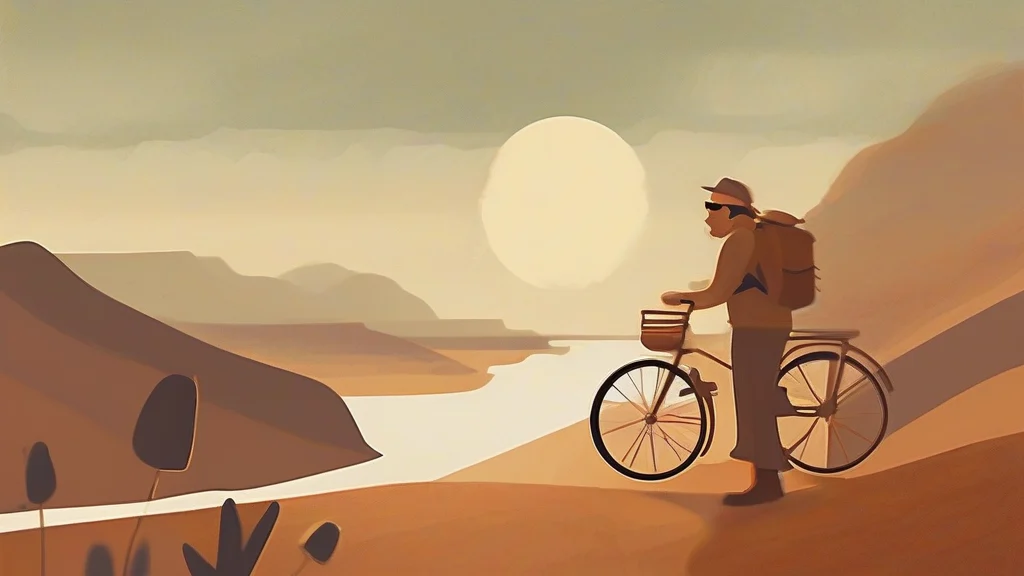
A wayfarer is someone who travels on foot, particularly a traveler whose journey is long, solitary, or associated with wandering. The word appears in literature, poetry, legends, and accounts of journeys, where it often conveys more than the neutral term “traveler.” Its associations include tiredness, distance, unfamiliar surroundings, independence, and the freedom of movement. “Wayfarer” can describe an ordinary person on a difficult road, as in “the weary wayfarer,” but it can also have a romantic quality, evoking a solitary figure moving through a distant or old-fashioned world. The related adjective “wayfaring” is especially familiar in phrases such as “a wayfaring stranger.” Although the word is not restricted to British or American English, it sounds more literary and traditional than everyday alternatives such as “traveler” or “wanderer.”
nounA person who travels on foot, especially someone who journeys over a long distance or lives as a wanderer.
- A person who travels on foot, especially one who travels over long distances or lives as a wanderer.
"The weary wayfarer reached the village just as the evening bells began to ring."
"A solitary wayfarer rested beneath the old oak tree."
"The novel follows a wayfarer who searches for his missing sister across the countryside."
The regular plural is used for multiple travelers, with or without a preceding determiner.
"The two wayfarers shared the last of their bread by the fire."
A wayfarer is not merely a traveler: the word evokes long roads, tired feet, and the freedom of being far from home.
Reviewed by Deb Chak, Editor. AI-assisted content curated by RJS Tech Solutions LLP.
Where does wayfarer come from?
Wayfarer developed in medieval English by combining “way,” in the sense of a journey or path, with “farer,” meaning a traveler or one who goes. “Way” continues Old English wæg, while “fare” comes from Old English fēran, “to go or travel,” and ultimately has Germanic roots. Related forms such as “wayward” and “waylay” preserve the older “way” element in senses connected with a path or journey. The modern compound retains the older emphasis on traveling by foot.
Related word forms
How wayfarer is actually used
The word is literary and slightly old-fashioned. It commonly suggests travel on foot and may carry a romantic or nostalgic sense of wandering, independence, and remoteness from ordinary life.