
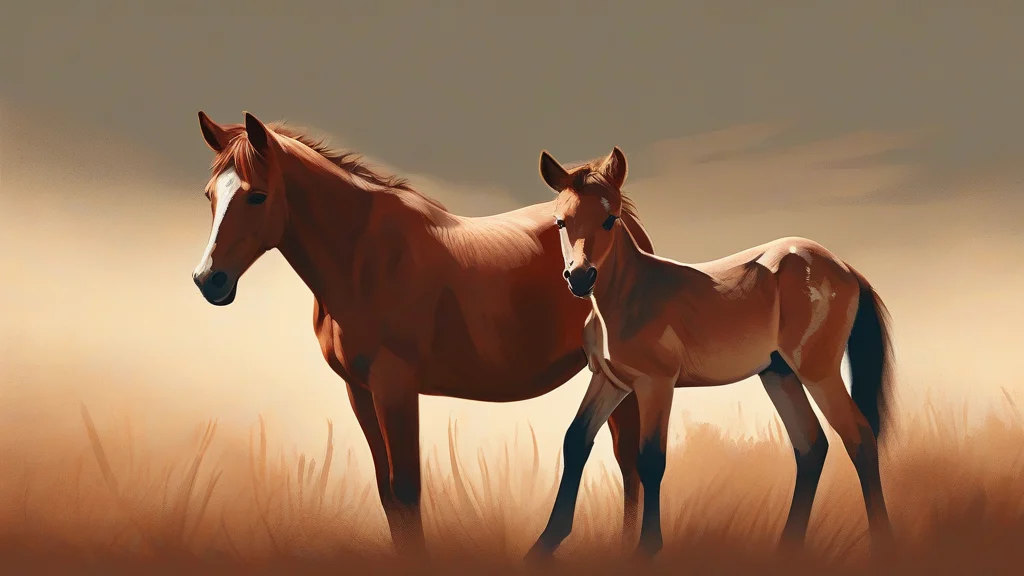
What does weanling mean?
A weanling is a child or young animal that has recently been weaned, meaning it has stopped relying on its mother's milk and begun living on other food. For people, the word is relatively uncommon and literary, often carrying a gentle or slightly old-fashioned tone that evokes early childhood and the beginning of independence. In farming and animal husbandry, it is more common and refers especially to a calf, lamb, pig, or other young livestock separated from its mother. The word distinguishes this transitional stage from both a nursing young animal and an older juvenile or yearling. Its clear connection to a notable developmental milestone makes it useful when discussing children, animal care, or the practical process of weaning.
nounA child who has recently been weaned from breast milk, or a young animal, especially livestock, that has recently been separated from its mother's milk and begun eating solid food.
- A child who has recently been weaned from breast milk and has begun eating other foods.
- A young animal, especially a calf, lamb, or pig, that has recently been separated from its mother and weaned onto solid food.
"The weanling explores the garden while its mother watches from the shade."
"The nurse encouraged the weanling to try a spoonful of mashed vegetables."
"The farmer checked each weanling calf to make sure it was eating enough grain."
The regular plural form is used for multiple children or young animals.
"The shelter cared for several weanlings until they were strong enough to be rehomed."
A weanling marks the memorable first stage of independence: the young animal or child has left the mother's milk behind.
Reviewed by Deb Chak, Editor. AI-assisted content curated by RJS Tech Solutions LLP.
Etymology of weanling
The word is a Middle English formation from the verb wean plus the suffix -ling. Wean descends from Old English wēnian, meaning 'to wean' or 'to accustom to a diet other than milk,' while -ling forms a noun referring to a person or thing associated with the action. The same root underlies modern forms such as wean and weaning.
How weanling is actually used
The word is more literary or technical than the general terms child and young animal. In agricultural contexts, it commonly refers to livestock shortly after weaning.
Easily confused with weanling
A weanling has only recently been weaned, whereas a yearling is typically an animal that is about one year old.