
What does weir mean?
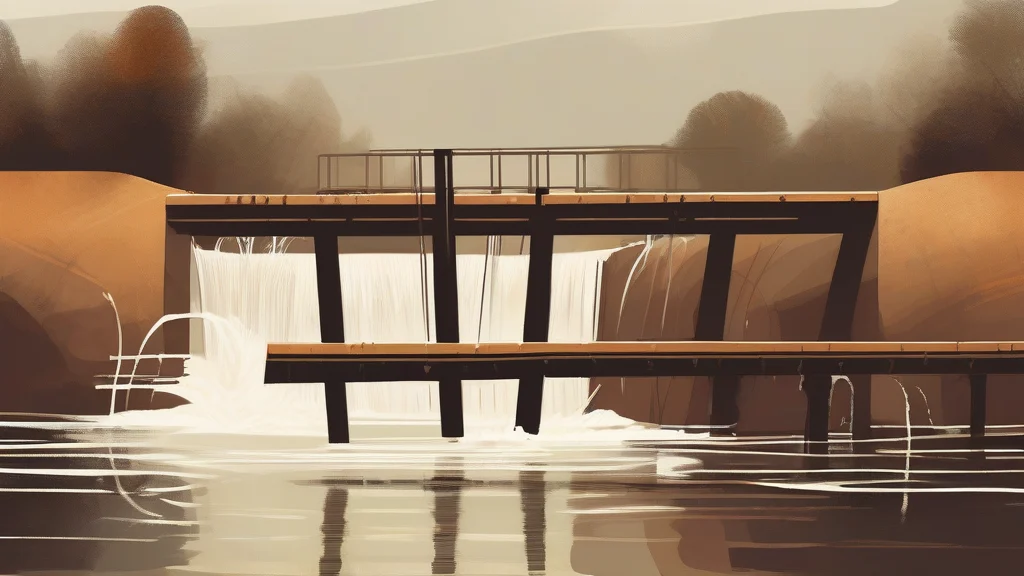
A weir is a low barrier built across a river, stream, or channel to raise or regulate the water level, control the current, or divert the flow. Historically, weirs were often associated with mills, fisheries, irrigation, and the management of water for farming and industry. A fish weir uses stakes or similar structures to catch or direct fish, while a mill weir helps maintain the flow required to turn a mill wheel. The word can also be used as a verb, as in “weir the stream,” meaning to place or construct a weir in it. Although pronunciation differs between British and American English, the meaning and function remain the same. A weir should not be confused with a wire, which is a thin strand of metal. The term is especially useful when describing rivers, waterworks, historic mills, and the physical remains of earlier water-management systems.
A low dam or barrier built across a watercourse to raise or control the water level, regulate the flow, or divert water; it may also be a barrier constructed to catch fish.
"Water levels above the weir remained high enough for the mill to operate."
The engineering sense is the dominant modern use; the fish-catching sense is older and survives chiefly in historical and regional contexts.
To dam or restrict a river or stream by constructing a weir in it.
"The engineers decided to weir the stream to create a controlled pond upstream."
This use is much less common than the noun and is mainly found in specialist or historical writing.
The standard plural is weirs.
"Several weirs regulate the flow of water through the valley."
A weir is a dam with a special purpose: it makes a river rise, slow down, or change direction.
Reviewed by Deb Chak, Editor. AI-assisted content curated by RJS Tech Solutions LLP.
Where does weir come from?
The word descends from Old English wier, meaning “dam” or “wall,” and continued in Middle English in its modern form. Its deeper Germanic and Indo-European roots connect it with ideas of covering, guarding, and forming an obstruction. The same broad root underlies related English words such as ware and wary, although their modern meanings have developed along different paths.
How weir is actually used
The noun is common in engineering, water management, and historical landscape description. The verb is much less frequent and is chiefly encountered in specialist, regional, or historical contexts.
Easily confused with weir
A wire is a thin strand of metal, whereas a weir is a barrier built across moving water.