
What does wench mean?
Wench is now chiefly an archaic verb meaning to whine or complain, usually in a plaintive, persistent, or self-pitying manner. Writers may use it for comic period effect, as in “Stop wenching about such a small inconvenience,” though the diction would sound conspicuously old-fashioned in ordinary conversation. As a noun, wench is also dated: it formerly denoted a girl or young woman and could acquire a sharply derogatory sense, referring to a woman labeled sexually promiscuous or socially inferior. Those older noun meanings survive mainly in literature, dialect, and historical discussion rather than neutral modern usage. The word’s two histories are not identical: the verb developed from an Old English term for whining, while the noun came through an Old English word for a girl or young woman. Because wench now sounds both antique and awkward, it can create humorous or theatrical effects, but substituting whine or complain will usually be clearer in contemporary prose. Its unusual combination of meanings and dated social connotations makes it a memorable example of how the status and tone of a word can change while its sound remains recognizable.
To whine or complain, especially in a plaintive or persistent manner.
"The child sat beneath the tree, wenching that the other children would not let him play."
Archaic and literary, though it survives in older regional usage and in phrases intended to create period or comic effect.
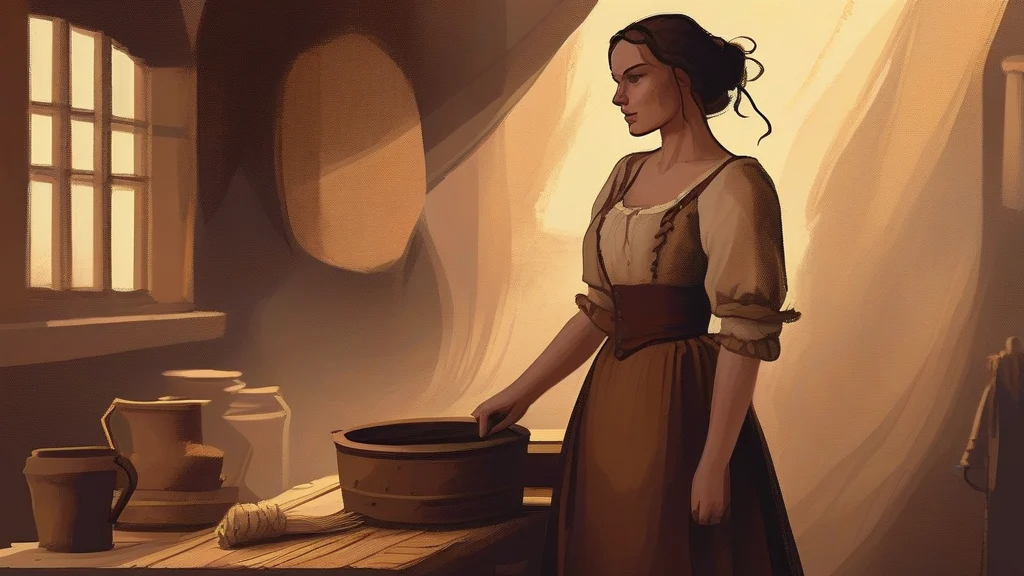
A girl or young woman; in older usage, a disparaging term for a woman regarded as sexually promiscuous or of low social status.
"The minstrel sang of a country wench and her absent sailor."
Dated and literary. The older derogatory sense is unsuitable for neutral or respectful modern usage.
The regular plural is wenches, although the noun itself is now dated and literary.
"The ballad opens with two wenches working beside the river."
Wench has a split history: its verb means “to complain,” while its old noun means a young woman and can carry a distinctly insulting edge.
Reviewed by Deb Chak, Editor. AI-assisted content curated by RJS Tech Solutions LLP.
Where does wench come from?
The verb comes through Middle English wenchen from Old English wēncan, meaning “to whine,” and is cognate with forms such as ween, wean, German weinen, and Dutch wenen. The noun has a separate immediate history, entering Middle English from an Old English term for a girl or young woman; its disparaging sexual and social senses developed later. The verb’s Germanic lineage is commonly traced to the Indo-European root *wen-, associated with desire or wishing.
Related word forms
How wench is actually used
The verb is archaic or literary and sounds deliberately old-fashioned in modern prose. The noun is also dated and may be objectifying or insulting in its older pejorative sense.
Easily confused with wench
A wench is an archaic verb meaning to whine or complain, whereas a wrench is a tool used for turning or tightening fittings.