
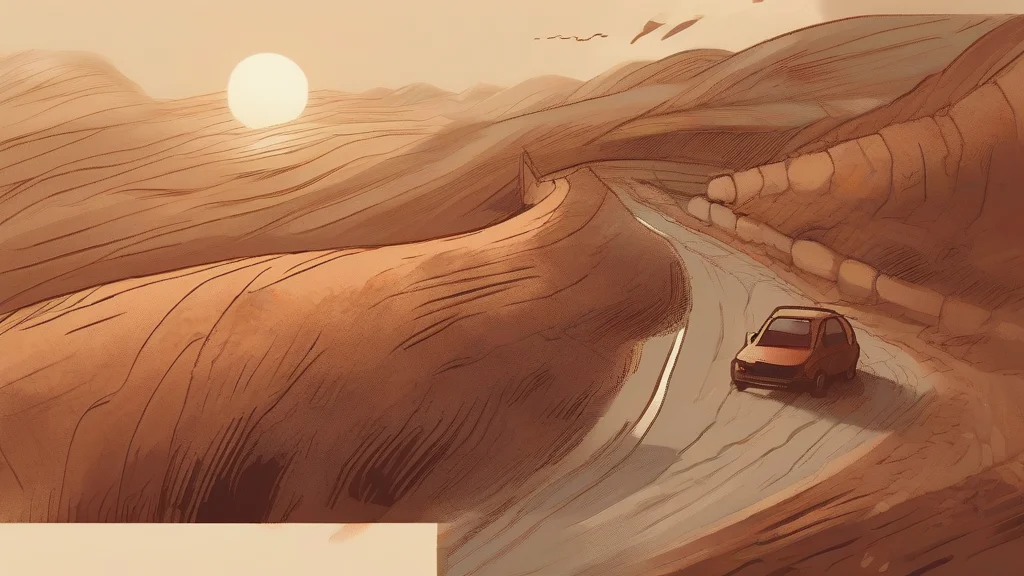
What does wending mean?
Wending is an uncommon literary word associated with movement, travel, and gradual progress. As the present participle of wend, it means going or proceeding along a course, and modern expressions often give it a figurative sense of something advancing slowly, indirectly, or by stages. The familiar image of a river, road, or project wending its way illustrates this usage. As a noun, wending can refer to an act, path, or course of going, though this form is much rarer than the participle. The word is more characteristic of formal or literary English than ordinary conversation, but it remains useful for describing movement that feels winding, patient, or circuitous. It should not be confused with winding, which primarily describes something that turns or curves.
An act, path, or course of going.
"The travelers followed the ancient wending through the hills."
This noun form is uncommon and occurs chiefly in literary or historical contexts.
Going or traveling; proceeding, often gradually or indirectly.
"The proposal was wending its way through the committee."
Often used figuratively for progress that is slow, indirect, or continuous.
The plural is grammatical but uncommon.
"The map records the road's numerous wendings."
Wending preserves an old idea of motion: its root means “go,” making the word an evocative name for a journey or course.
Reviewed by Deb Chak, Editor. AI-assisted content curated by RJS Tech Solutions LLP.
Where does wending come from?
Wending derives from Old English wendan, meaning “to go,” “turn,” or “move,” with roots shared by related words in other Germanic languages. Its cognates include wind in the sense of turning or winding and wander, both associated with movement. In modern English, wend is uncommon, but its present participle survives especially in the expression of traveling or making gradual progress.
Related word forms
How wending is actually used
More literary than everyday. It often conveys indirect, gradual, or unobtrusive movement or progress, and its use as a noun is especially uncommon.
Easily confused with wending
Wending means going or traveling, especially gradually or indirectly, whereas winding means turning or curving in a series of bends.