
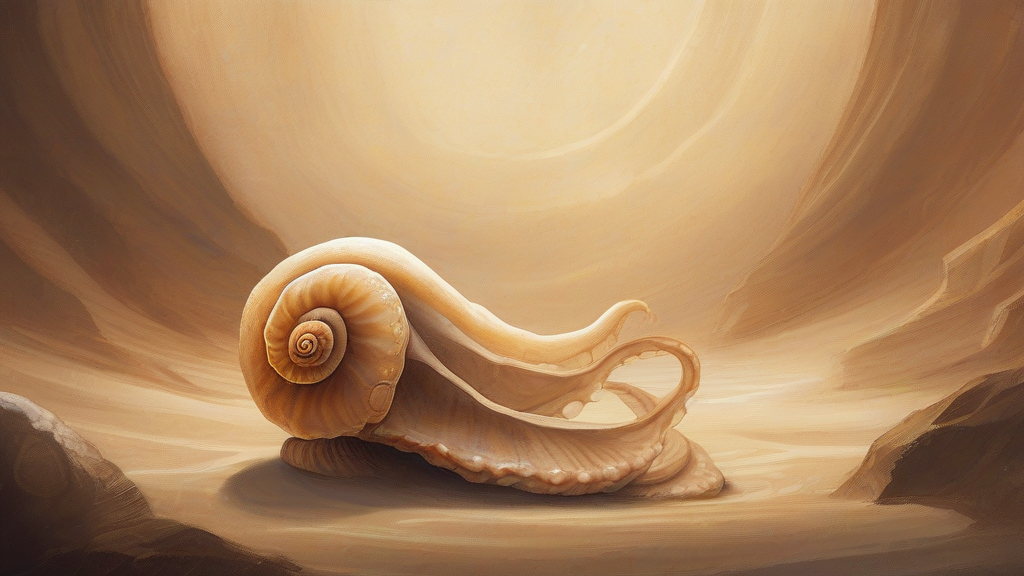
What does wentletrap mean?
A wentletrap is a small marine gastropod, or sea snail, belonging to the family Epitoniidae. Its most recognizable feature is its elongated, often spindle-shaped shell, which bears a series of raised axial ribs running across its surface. Wentletraps live in marine habitats and can be encountered along rocky shores, coral reefs, or in shell collections. The word is chiefly used in zoology, natural history, and shell collecting rather than everyday speech. Although “epitonia” is sometimes used as a common equivalent, “wentletrap” remains the established English name for these distinctive snails. The word also has an appealing descriptive history: it comes from Dutch for a winding or spiral staircase, a comparison that aptly evokes the coiled form of the shell. Its combination of precise biological meaning and unusual name makes it especially memorable to readers who enjoy coastal wildlife and natural-world vocabulary.
nounAny of various marine gastropod mollusks in the family Epitoniidae, typically having an elongated, spindle-shaped shell with prominent axial ribs.
- A marine gastropod mollusk of the family Epitoniidae, with an elongated, ribbed shell.
"The beachcomber found a delicate wentletrap whose ribbed shell was threaded with seaweed."
"A wentletrap rested among the coral fragments on the seabed."
"The natural history collection includes several wentletrap shells from the eastern Atlantic."
The standard plural adds -s; plural wentletraps refers to multiple snails of this kind.
"Researchers identified several wentletraps living beneath the rocks."
A marine snail named for its spiral shell, the wentletrap is essentially a sea creature shaped like a winding staircase.
Reviewed by Deb Chak, Editor. AI-assisted content curated by RJS Tech Solutions LLP.
Etymology of wentletrap
The English word was borrowed from Dutch wenteltrap, literally a “winding staircase” or “spiral staircase.” The Dutch expression combines a term for winding with trap, meaning a stair or staircase. The name was applied to the mollusk because of the spiraling form of its shell, and related Germanic forms such as wend and wind reflect the same basic sense of turning.
How wentletrap is actually used
This is a specialized zoological term and is uncommon in general conversation. It is most often used in marine biology, natural-history collections, and discussions of shells and mollusks.